
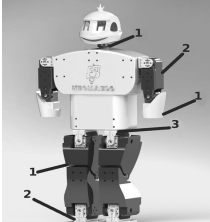
Innovative human-robot interaction for a robot tutor in biology game
Robots nowadays, are introduced to many domains and fields. One of these fields is education. We introduce integrating robots and games in education. We have designed a humanoid robot tutoring biology. Our robot is interacting with a student to play a game to enhance and examine the student's knowledge. In our game, we developed cognitive capabilities for the robot. We analyzed the features that both the robot and the game have to possess, and we developed a system for organ detection and recognition with the highest possible accuracy and lowest processing time. Our game introduces a multi
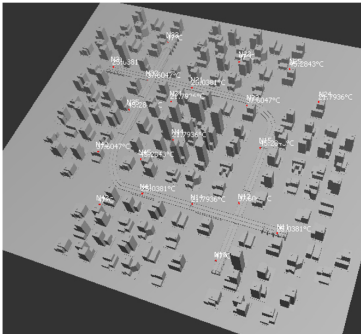
Interactive 3D visualization for wireless sensor networks
Wireless sensor networks open up a new realm of ubiquitous computing applications based on distributed large-scale data collection by embedded sensor nodes that are wirelessly connected and seamlessly integrated within the environment. 3D visualization of sensory data is a challenging issue, however, due to the large number of sensors used in typical deployments, continuous data streams, and constantly varying network topology. This paper describes a practical approach for interactive 3D visualization of wireless sensor network data. A regular 3D grid is reconstructed using scattered sensor
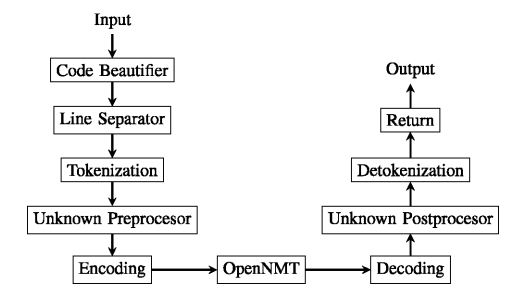
Neural Machine Based Mobile Applications Code Translation
Although many cross platform mobile development software used a trans-compiler-based approach, it was very difficult to generalize it to work in both directions. For example, to convert between Java for Android Development and Swift for iOS development and vice versa. This is due to the need of writing a specific parser for each source language, and a specific code generator for each destination language. Neural network-based models are used successfully to translate between natural languages, including English, French, German any many others by providing enough datasets and without the need
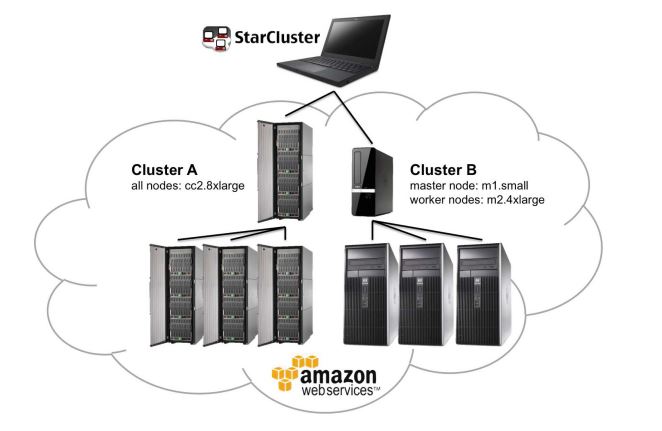
New governance framework to secure cloud computing
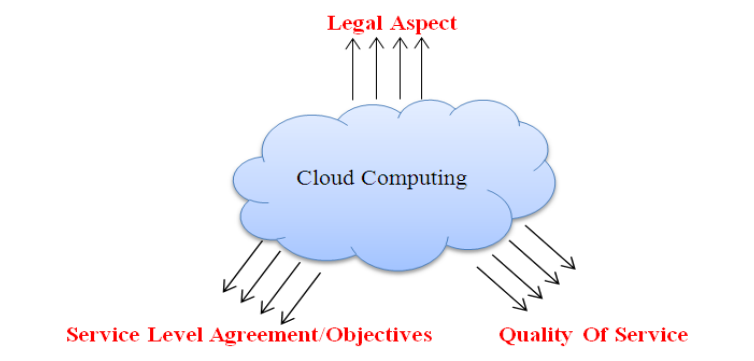
Cloud computing is enabling proper, on-demand network access to a shared pool of computing resources that is elastic in reserve and release with minimal interaction from cloud service provider. As cloud gains maturity, cloud service providers are becoming more competitive, which increase the percentage of cloud adoption. But security remains the most cited challenge in Cloud. So, while we are progressing in cloud adoption, we have to define key elements of our cloud strategy and governance. Governance is about applying policies relating to used services. Therefore, it has to include the
Towards IT-Legal Framework for Cloud Computing
As the common understanding of Cloud Computing is continuously evolving, the terminology and concepts used to define it often need clarifying. Therefore, Cloud customers and Cloud Providers are used to dispute about Service Level Agreements, Service Level Objectives and Quality of Service. Simultaneously, SLAs/SLOs/QoS represent other related technical problems such as Security, Privacy, Compliancy and others. Technical problems are usually defined within technical context, where both parties ignore analyzing problem's legally related causes. In fact, these problems are stemming from the
Traffisense: A smart integrated visual sensing system for traffic monitoring
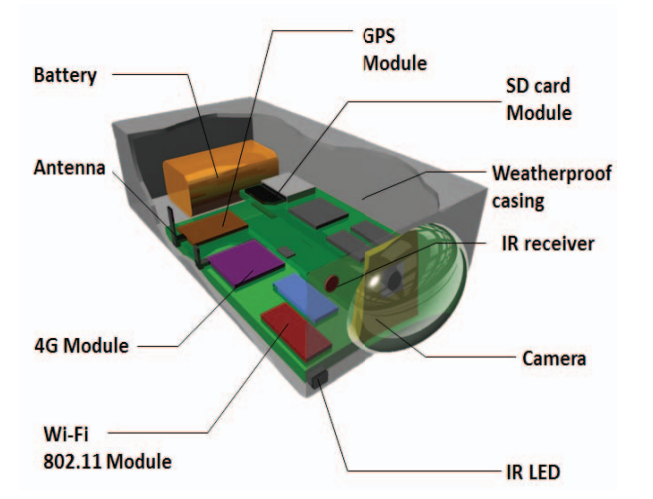
Intelligent camera systems provide an effective solution for road traffic monitoring with traffic stream characteristics, such as volumes and densities, continuously computed and relayed to control stations. However, developing a functional vision-based traffic monitoring system is a complex task that entails the creation of appropriate visual sensing platforms with on-board visual analytics algorithms, integration of versatile technologies for data provision and stream management, and development of data visualization techniques suitable for end-users. This paper describes TraffiSense, a
A survey on smart cities’ IoT
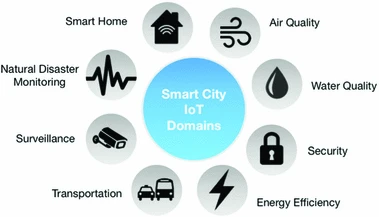
The rise of the Internet of Things (IoT) has led to a numerous and diverse amount of products and real life implementations for smart cities in the last few years. With the many opportunities and challenges, the academic and industrial field has come up with many hardware and middleware platforms. We categorise these different IoT applications and solutions into different domains and present an application for each. This survey aims at defining the state-of-the-art major and common technologies, frameworks, and applications used to open doors to drive future research and to spark new ideas for
Combined regional and spatio-temporal approach improves hepatic tumors classification in Multiphase CT
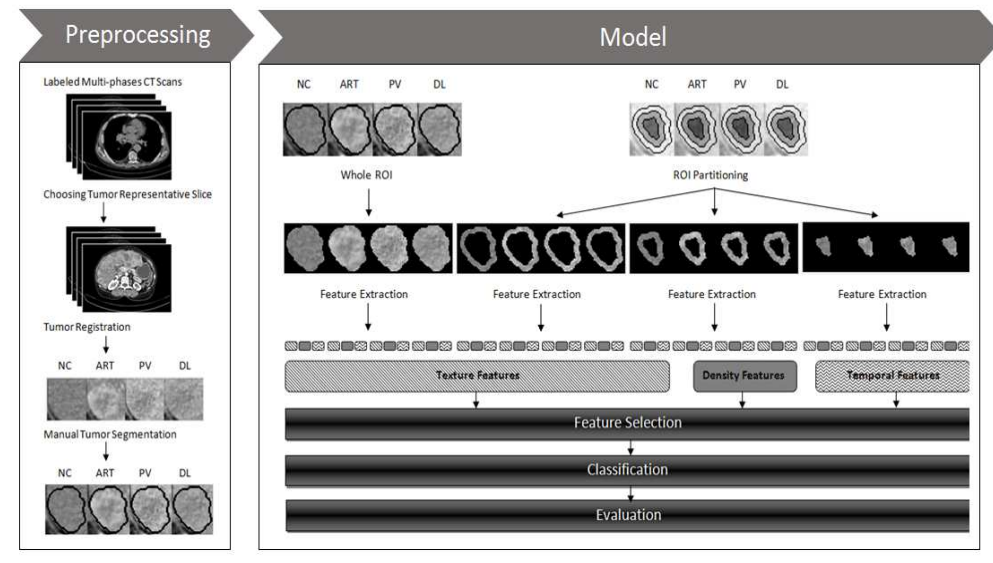
In this work, we investigate the effect of using spatio-tepmoral features on a regional basis on the liver focal lesions classification performance in the multiphase CT images. Texture, Density, and temporal feature set and their different combinations along spatial partitioned ROI were investigated to better characterizing five hepatic pathologies from multiphase contrast-enhanced CT scans. Embedded feature selection followed by decision tree ensembles classification with ten folds cross-validation were employed to classify a total of 180 ROI includes normal tissues, cyst, haemangioma
Change analysis for gait impairment quantification in smart environments
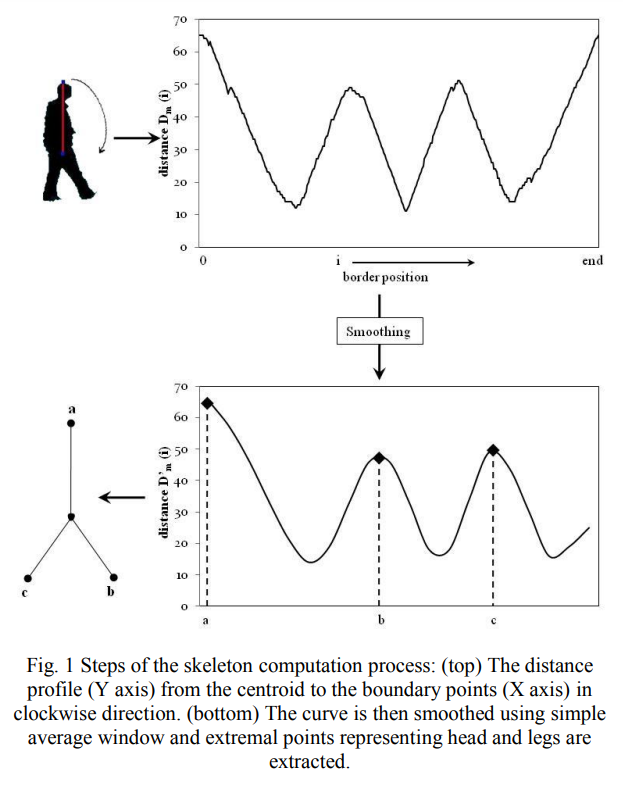
Visual Sensor Networks (VSNs) open up a new realm of smart autonomous applications based on enhanced three- dimensional sensing and collaborative reasoning. An emerging VSN application domain is pervasive healthcare delivery where gait information computed from distributed vision nodes is used for observing the wellbeing of the elderly, quantifying post-operative patient recovery and monitoring the progression of neurodegenerative diseases such as Parkinson's. The development of patient-specific gait analysis models, however, is challenging since it is unfeasible to obtain normal and impaired
Real-time scale-adaptive compressive tracking using two classification stages
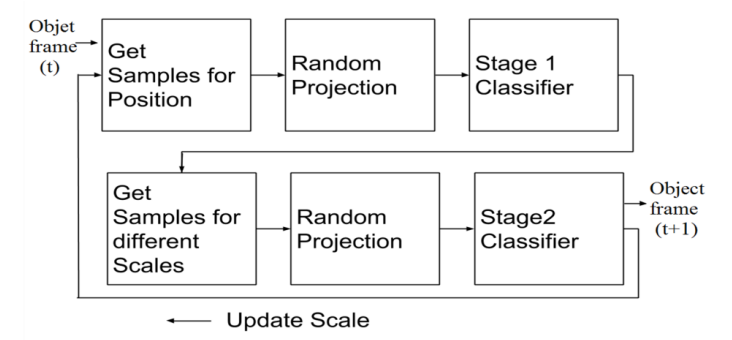
In this paper, we describe a method for Scale-Adaptive visual tracking using compressive sensing. Instead of using scale-invariant-features to estimate the object size every few frames, we use the compressed features at different scale then perform a second stage of classification to detect the best-fit scale. We describe the proposed mechanism of how we implement the Bayesian Classifier used in the algorithm and how to tune the classifier to address the scaling problem and the method of selecting the positive training samples and negative training samples of different scales. The obtained