
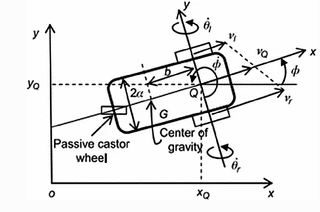
Two-Degree of Freedom Proportional Integral Derivative (2-DOF PID) Controller for Robotic Infusion Stand
Infusion Stand is one of the medical supportive tools in the field of biomedical that assist in holding and carrying medications to patients via intravenous injections. Mobilization of Infusion Stand from a place to another place is necessary not only for the patients itself but also for the nurses. Therefore, this leads to not only uneasiness but also inconvenience for both parties. Therefore, to improve the existing situation and current Infusion Stand in the market, a proposal to design and implement a prototypic Robotic Infusion Stand is submitted. In this paper, 2-Degree of Freedom
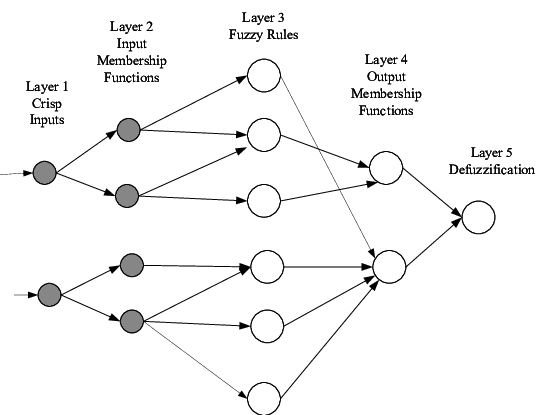
Neuro-fuzzy system for 3-dof parallel robot manipulator
Planar Parallel manipulators (PPMs) are widely used these days, as they have many advantages compared to their serial counterparts. However, their inverse and direct kinematics are hard to obtain, due to the complexity of the manipulators' behavior. Therefore, this paper provides a comparative analysis for two methods that were used to obtain the inverse kinematics of a 3-RRR manipulator. Instead of the conventional algebraic and graphical methods used for attaining the mathematical models for such manipulators, an adaptive neuro-fuzzy inference structure (AFNIS) model was alternatively
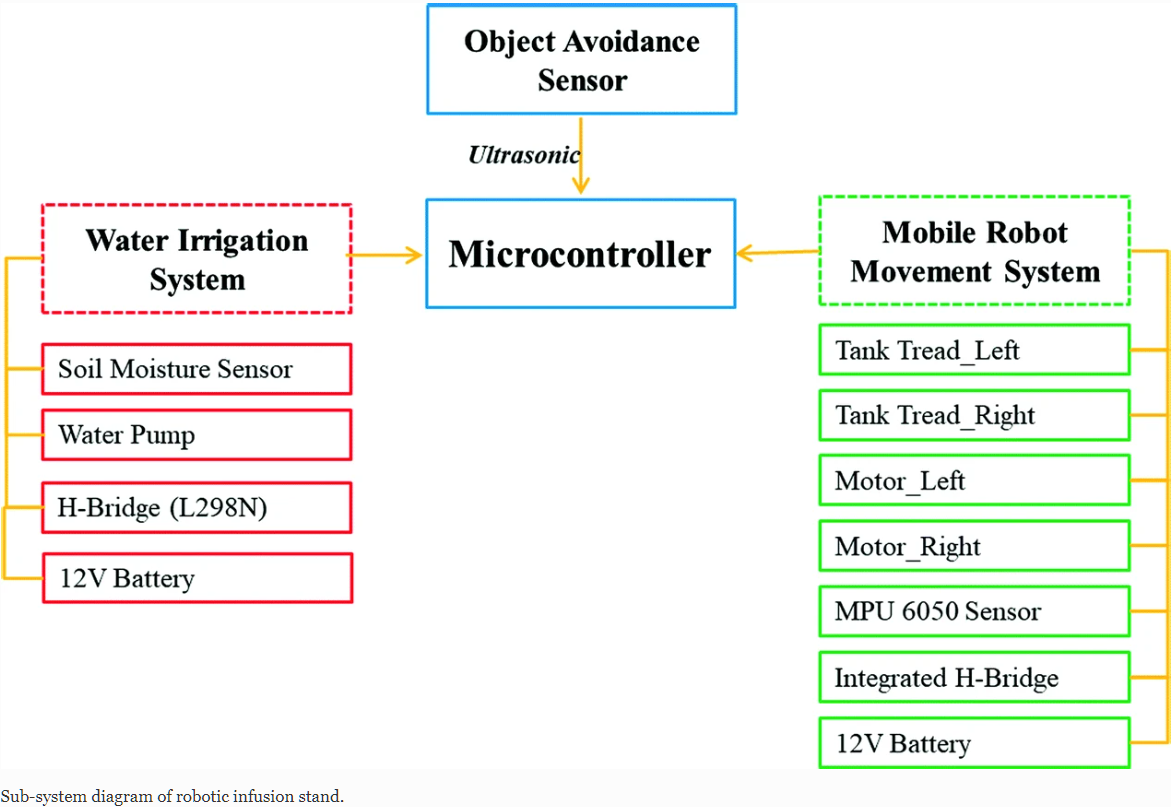
Optimal Proportional Integral Derivative (PID) Controller Design for Smart Irrigation Mobile Robot with Soil Moisture Sensor
Uncertainty on the condition of the weather always give a major headache to the agricultural industry as the cultivated plant that is grown on a large scale commercially rely on the condition of the weather. Therefore, to reduce the interdependency on the weather itself, a recommendation to develop a prototypic mobile robot for smart irrigation is submitted. Smart irrigation system is an essential tool from yield point of view and scarcity of the water. This smart irrigation system adopts a soil moisture sensor to measure the moisture content of the soil and automatically provide a signal to

Study of Approaches to Implement the Prism-Based Surface Plasmon Resonance Sensors
Surface plasmon resonance (SPR) sensors are increasingly in demand due to their high sensitivity, better accuracy, and improved detection limit. Such performance parameters make these sensors suitable for biological and medical field’s applications. During the last decade, prism coupling-based SPR sensors had been a preferred choice among the designer and developers across the globe. This article summarizes a review of prism coupling-based SPR photonic sensors. Important performance characteristics of such sensors have also been studied with respect to their detection accuracy, sensitivity
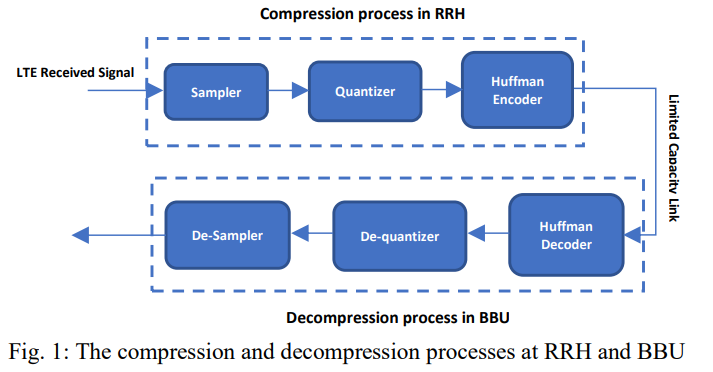
CPRI data compression using non-uniform quantized huffman technique in c-RAN
The long-term evolution (LTE) transports complex-baseband samples between the remote radio head and baseband processing unit. Common public radio interface (CPRI) protocol is used in practice and enables flexible radio head deployments and distributed antenna systems. Current wireless links (FSO and mmWave) have a few Gb/p transmissions which insufficient capacity are to support 20 MHz bandwidth LTE with multiple sectors. In this presented work, we propose a compression algorithm uses non-quantized Huffman. The proposed technique achieves 78% compression ratio while maintaining with EVM less
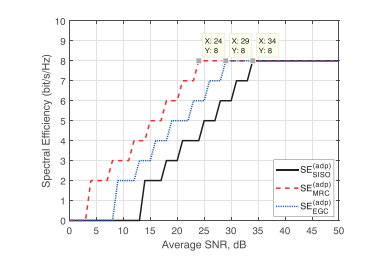
Spectral efficiency improvement with SISO and SIMO in M-QAM over millimeter-wave links
This paper proposes a spectral efficiency improvement technique for millimeter wave (mmWave) links. The proposed technique provides an efficient utilization of the mmWave link capacity. This technique is applied in three cases the single-input single-output (SISO), single-input multiple-output (SIMO) with the maximal ratio combining and with the equal gain combining. The M-ary quadrature amplitude modulation scheme is used in our work. The power series expansion is used for deriving closed-form expressions for bit error rate (BER) performances in all studied cases. The BER closed-form
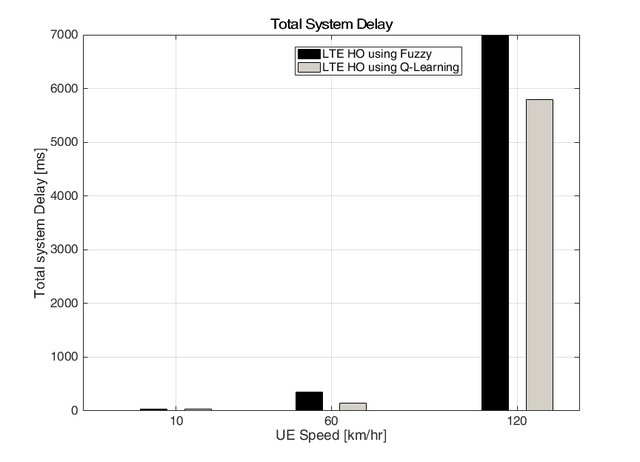
Type-2 Fuzzy Technique for LTE Handover Optimization Based on Cooperated Multi-Point
A seamless and fast handover from one cell to another is one of the main goals of long term evolution (LTE). Hence, the decision of handover is a critical part of the design process of handover. Then the selection of handover parameters must be in a careful and optimal way to have an efficient and successful handover. In this paper, a new optimized CoMP handover algorithm (CoMP HO) for LTE network based on type-2 fuzzy logic is presented. CoMP HO's were implemented by considering the cell-edge users and how to serve them without handover. It is shown via simulation that the proposed CoMP HO's
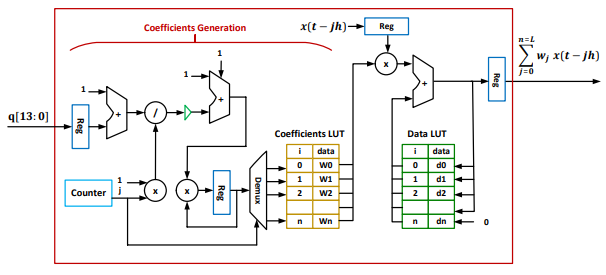
Reconfigurable FPGA Realization of Fractional-Order Chaotic Systems
This paper proposes FPGA realization of an IP core for generic fractional-order derivative based on Grünwald-Letnikov approximation. This generic design is applied to achieve reconfigurable realization of fractional-order chaotic systems. The fractional-order real-time configuration boosts the suitability of this particular realization for different applications, including dynamic switching, synchronization, and encryption. The proposed design targets optimized utilization of the FPGA internal resources and efficient employment of the external peripherals: switches and I/O ports in the FPGA
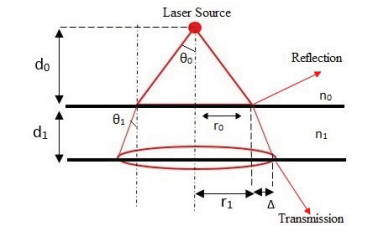
Study of optical power variations in multi-layer human skin model for monitoring the light dose
Monitoring light dose is essential in much clinical procedures like bio-stimulation, neuro-medicine and photodynamic therapy and in many biophotonics applications such as optogenetics and biosensing. However, monitoring the optical power dissipation as light travels in different layers of tissue is essential in determining the required optical dose. Each part in the human body is protected by different thickness of skin layer; therefore, studying the variations of the optical power when light propagates in different thicknesses of the human skin is essential for safe and accurate medical
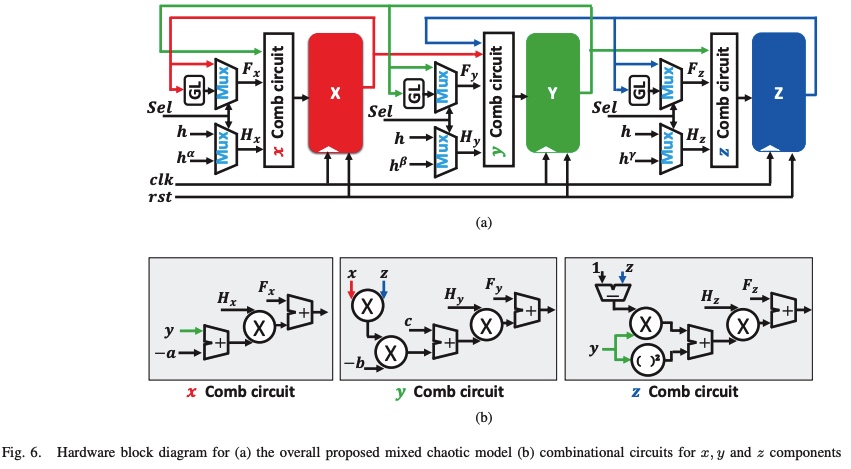
A Digital Hardware Implementation for A new Mixed-Order Nonlinear 3-D Chaotic System
This paper introduces a generic modeling for a 3-D nonlinear chaotic based on fractional-order mathematical rules. Also, a novel modeling for the system using a mixture between integer and fractional-order calculus is proposed. Dynamics of the new realization are illustrated using phase portrait diagrams with complex behavior. Also, a great change in the parameter ranges is investigated using bifurcation diagrams. MATLAB and Xilinx ISE 14.5 are used in system simulations. Furthermore, the digital hardware implementation is done using Xilinx FPGA Virtex-5 kit. The synthesis report shows that