
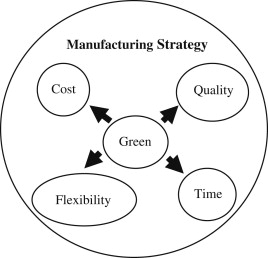
A system model for green manufacturing
Manufacturing systems evolution is afunction in multiple external and internal factors. With today's global awareness of environmental risks as well as the pressing needs to compete through efficiency, manufacturing systems are evolving into a new paradigm. This paper presents a system model for the new green manufacturing paradigm. The model captures various planning activities to migrate from a less green into a greener and more eco-efficient manufacturing. The various planning stages are accompanied by the required control metrics as well as various green tools in an open mixed architecture
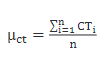
Assessing lean systems using variability mapping
A new approach to assess lean manufacturing based on system's variability is proposed. The assessment utilizes a new tool called variability source mapping (VSMII) which focuses on capturing and reducing variability across the production system. The new tool offers a new metric called variability index to measure the overall variability level of the system. Based on the mapping and the new metric, VSMII suggests a variability reduction plan guided by a recommendation list of both lean techniques as well as production control policies. An industrial application is used to demonstrate the new
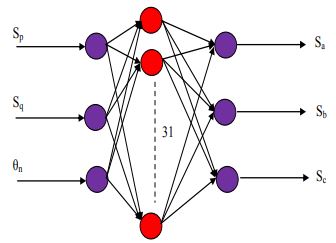
Neural Network Based Switching State Selection for Direct Power Control of Three Phase PWM-Rectifier
This article proposes an intelligent approach to the Direct Power Control technique of the PWM rectifier, this control technique improves the performance of PWM converter, called Direct Power Control Based on Artificial Neural Network (ANN), applied for the selection of the optimal control vector. DPC-ANN ensures smooth control of active and reactive power in all Sectors and reduces current ripple. Finally, the developed DPC was tested by simulation, the simulation results proved the excellent performance of the proposed DPC scheme. © 2018 IEEE.
Multistability Analysis and Function Projective Synchronization in Relay Coupled Oscillators
Regions of stability phases discovered in a general class of Genesio-Tesi chaotic oscillators are proposed. In a relatively large region of two-parameter space, the system has coexisting point attractors and limit cycles. The variation of two parameters is used to characterize the multistability by plotting the isospike diagrams for two nonsymmetric initial conditions. The parameters window in which the jerk system exhibits the unusual and striking feature of multiple attractors (e.g., coexistence of six disconnected periodic chaotic attractors and three-point attraction) is investigated. The

Enhanced plasmonic photovoltaic using embedded novel gear-shaped nanoparticles
In this paper, novel gear-shaped nanoparticles are introduced for the first time to enhance the photovoltaic (PV) efficiency. This has been achieved via increasing the overall power absorption by the PV semiconductor material in both visible and near-infrared ranges. The modes of the new gear-shaped nanoparticles are investigated. A parametric study has been performed which demonstrates how the design parameters of the proposed nanoparticles can be engineered for best overall power absorption within a Si surrounding medium. A figure of merit (FoM) is defined that takes into account all
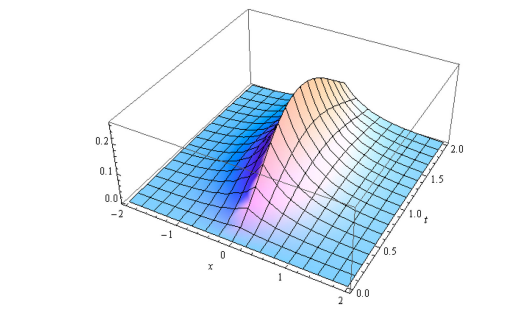
Two-dimensional heat conduction in a rigid thermal conductor within the dual-phase-lag model by one-sided Fourier transform
An exact analytical solution in closed form is obtained for a two-dimensional initial-boundary-value problem of heat wave propagation in a thick slab of an anisotropic rigid thermal conductor within the dual-phase-lag model. One-sided Fourier transform technique is used to obtain a formal solution. The method requires an essential change of the dependent variable in order to guarantee a suitable asymptotic time behavior of the unknown function. The solution satisfies prescribed boundary temperatures and zero initial conditions. Numerical results are presented to put in evidence the effect of

Experimental Modeling of Hexapod Robot Using Artificial Intelligence
Hexapod Robots gave us the opportunity to study walking robots without facing problems such as stability and expensive custom made hardware. It has a great deal of flexibility in moving over different terrains even if some legs become malfunctioned or facing some difficulties in movement. In this study the kinematic analysis of CH3-R 18DOF Hexapod Robot is discussed where each leg contains three revolute joints in order to mimic the structure of a spider. To develop the overall kinematic model of CH3-R robot, direct and inverse kinematic analyses for each leg have been considered where the
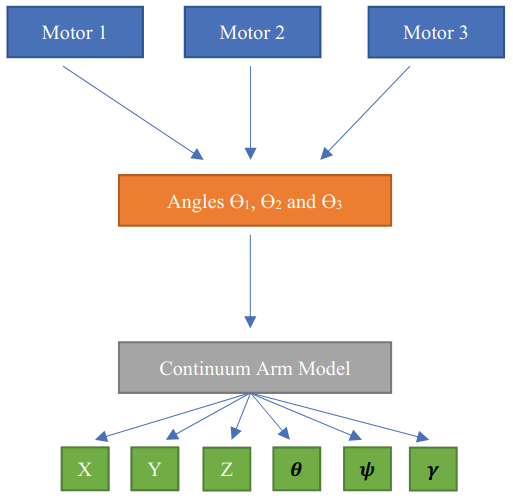
Modelling of Continuum Robotic Arm Using Artificial Neural Network (ANN)
Continuum robotic arm becomes the new area of scientific research nowadays. Its technology has grown and touched several vital applications included industry and agriculture thanks to many advantages made it a better choice than the conventional serial robotic manipulator. This paper represents a new designed model of continuum arm robot, which relates the motor shaft angle as the input parameter and transfers the motor torque to combined system of compression springs and results in six outputs: x,y and z 3D coordinates for the center point of the end effector and \theta,~\psi and \gamma to
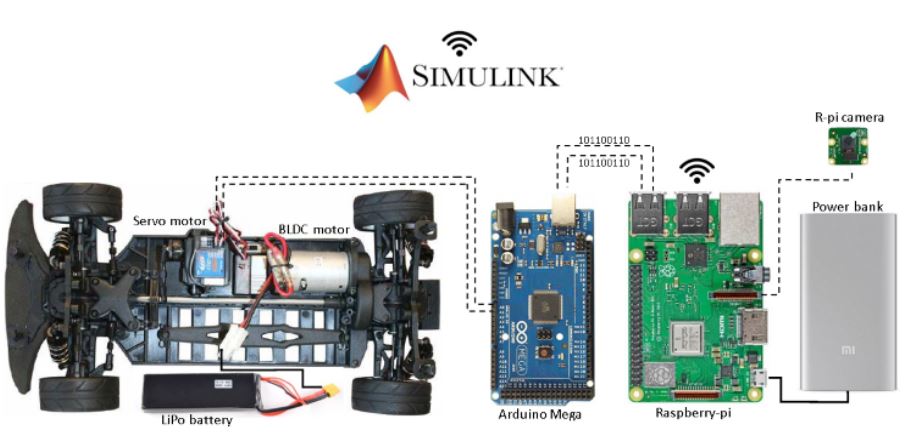
Experimental Lane Keeping Assist for an Autonomous Vehicle Based on Optimal PID Controller
Detection of the lane boundary is the primary task in order to control the trajectory of an autonomous car. In this paper, three methodologies for lane detection are discussed with experimental illustration: Blob analysis, Hough transformation and Birds eye view. The next task after receiving the boundary points is to apply a control law in order to trigger the steering and velocity control to the motors efficiently. In the following, a comparative analysis is made between different tuning criteria to tune PID controller for Lane Keeping Assist (LKA). In order to receive the information of the
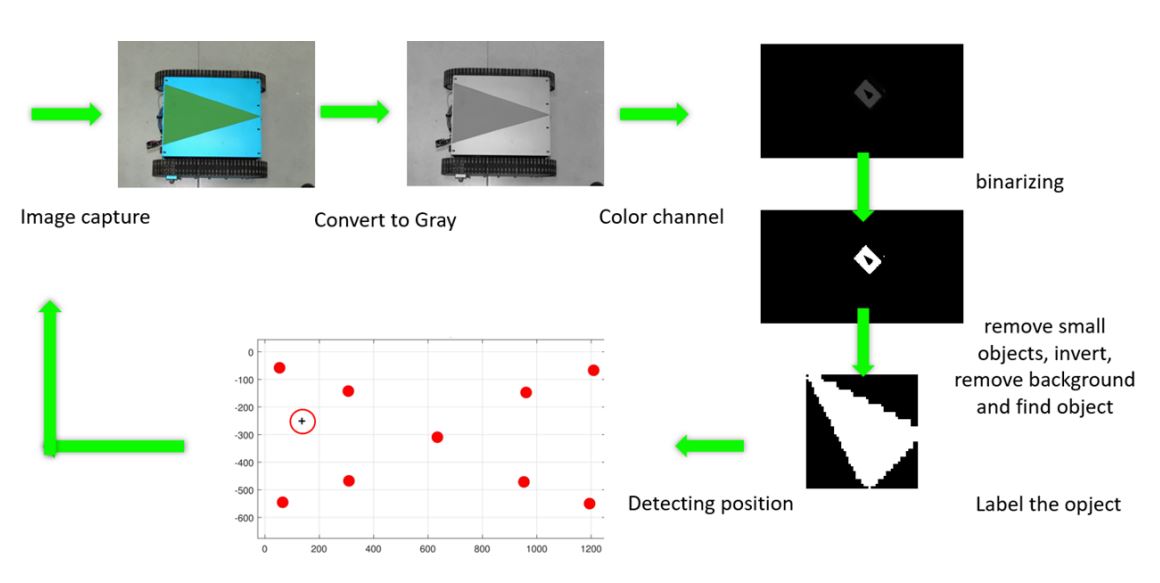
Experimental Path tracking optimization and control of a nonlinear skid steering tracked mobile robot
The skid steering tracked robot is consider one of the famous robots that used in the autonomous agricultural field. The robot model is considered as a coupled nonlinear model. So, a real kinematic model is required to develop the robot motion which will improve the high quality and quantity of the cultivated crops. So, in this research a mathematical model for the skid steering mobile robot (SSMR) and a mathamtical model has been presented to simulate the robot. The model has been validated based on experimental data for the Skid Steering model. The robot motion as position and velocity has