
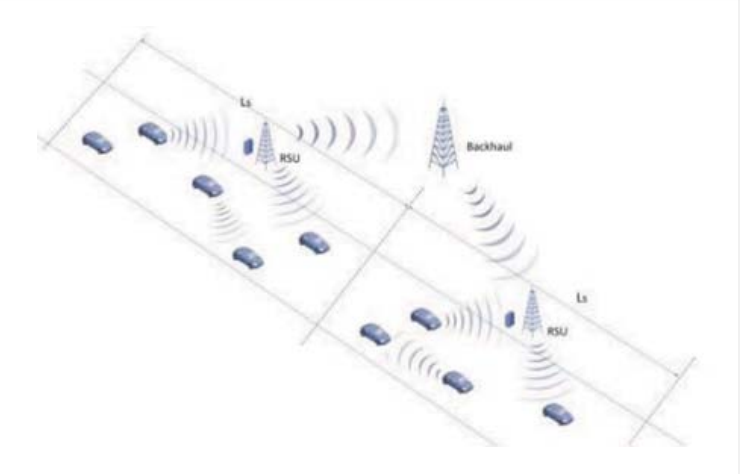
Hierarchical proactive caching for vehicular ad hoc networks
Recently, emerging vehicular applications are increasing the demand of vehicles which form significant burdens on network backhaul and represents a cause to the quality of experience (QoE) decay of the vehicular users. Proactive caching is a promising technique to mitigate the load on core networks by caching some of the expected data items. This work proposes a hierarchical proactive caching scheme which jointly considers caching in vehicles and roadside units (RSUs). Minimization of the vehicle communication latency is the main objective of our study. The optimization problem is formulated
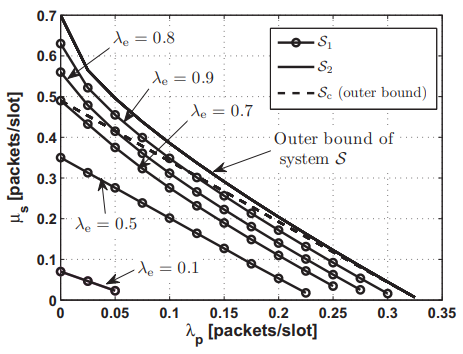
Maximum throughput of a cooperative energy harvesting cognitive radio user
In this paper, we investigate the maximum throughput of a saturated rechargeable secondary user (SU) sharing the spectrum with a primary user (PU). The SU harvests energy packets (tokens) from the environment with a certain harvesting rate. All transmitters are assumed to have data buffers. In addition to its own traffic buffer, the SU has a buffer for storing the admitted primary packets for relaying; and a buffer for storing the energy tokens harvested from the environment. We propose a new cooperative cognitive relaying protocol that allows the SU to relay a fraction of the undelivered
Optimum Scheduling the Electric Distribution Substations with a Case Study: An Integer Gaining-Sharing Knowledge-Based Metaheuristic Algorithm
This work is dedicated to the economic scheduling of the required electric stations in the upcoming 10-year long-term plan. The calculation of the required electric stations is carried out by estimating the yearly consumption of electricity over a long-time plan and then determining the required number of stations. The aim is to minimize the total establishing and operating costs of the stations based on a mathematical programming model with nonlinear objective function and integer decision variables. The introduced model is applied for a real practical case study to conclude the number of
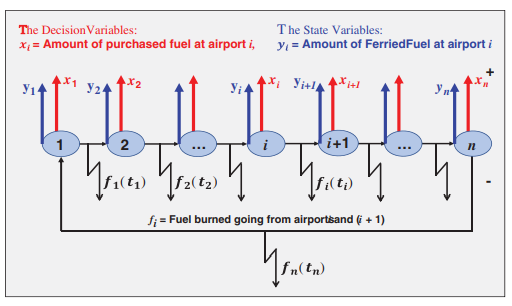
A stochastic flight problem simulation to minimize cost of refuelling
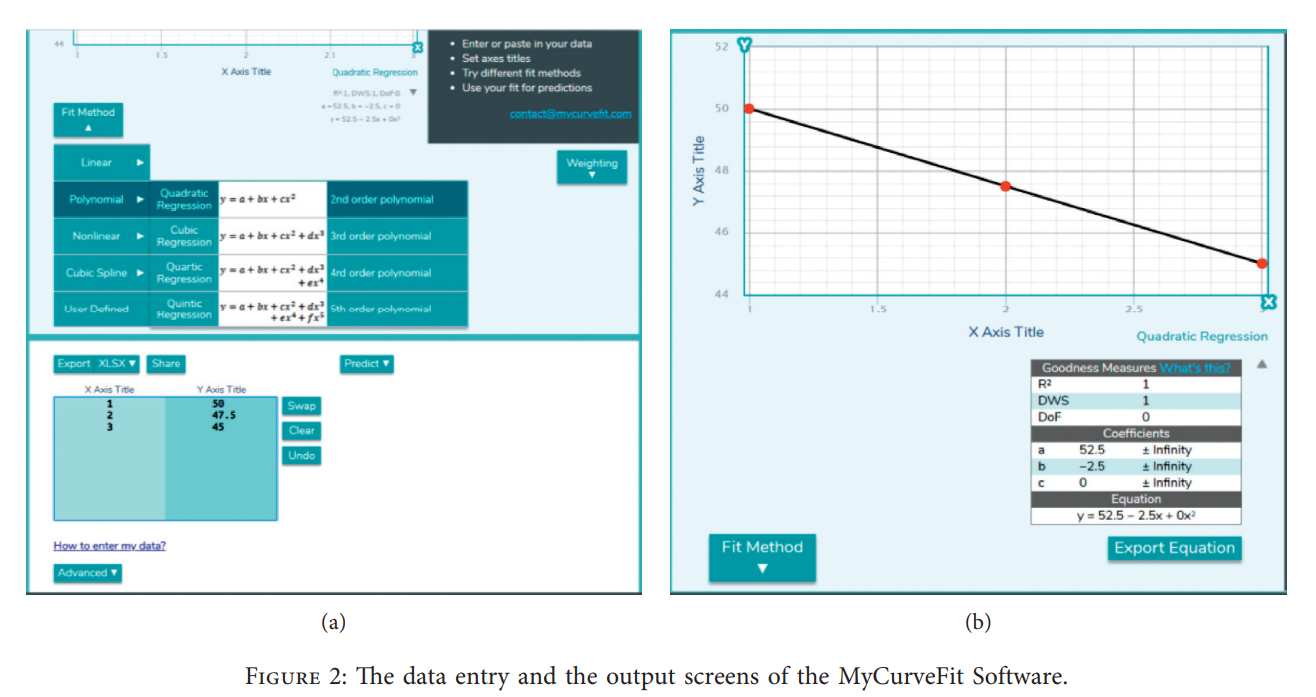
Commercial airline companies are continuously seeking to implement strategies for minimizing costs of fuel for their flight routes as acquiring jet fuel represents a significant part of operating and managing expenses for airline activities. A nonlinear mixed binary mathematical programming model for the airline fuel task is presented to minimize the total cost of refueling in an entire flight route problem. The model is enhanced to include possible discounts in fuel prices, which are performed by adding dummy variables and some restrictive constraints, or by fitting a suitable distribution
Towards energy efficient relay placement and load balancing in future wireless networks
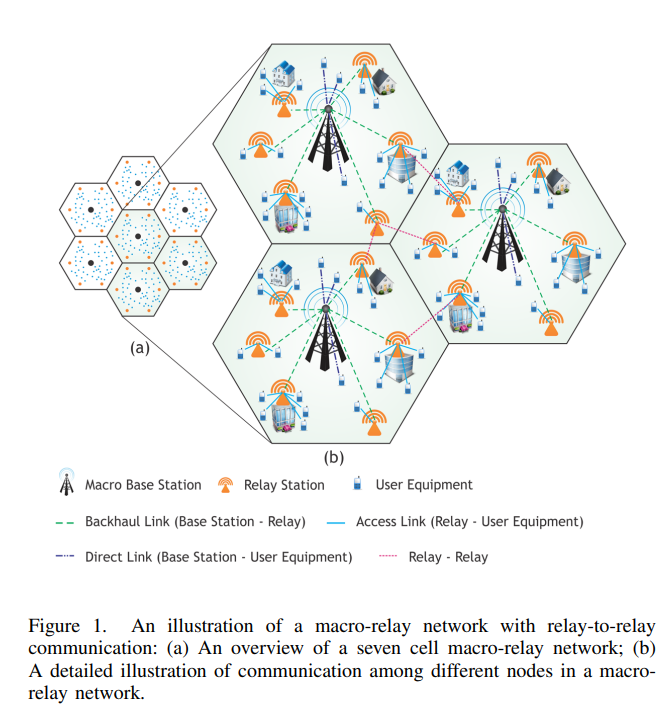
This paper presents an energy efficient relay deployment algorithm that determines the optimal location and number of relays for future wireless networks, including Long Term Evolution (LTE)-Advanced heterogeneous networks. We formulate an energy minimization problem for macro-relay heterogeneous networks as a Mixed Integer Linear Programming (MILP) problem. The proposed algorithm not only optimally connects users to either relays or eNodeBs (eNBs), but also allows eNBs to switch into inactive mode. This is possible by enabling relay-to-relay communication which forms the basis for relays to
Joint relay assignment and adaptive modulation for energy-efficient cellular networks
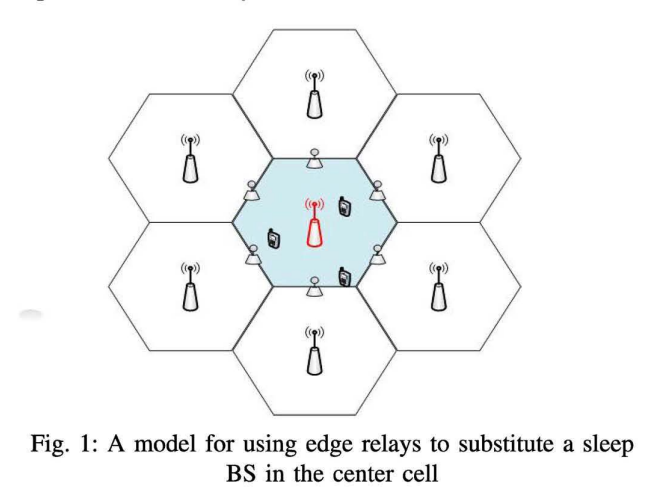
Energy efficient operation of cellular systems becomes a core design goal for economic and environment-friendly network operation. Several studies have shown that the energy consumed in base stations represents 60-80% of the energy consumption in cellular networks. In this paper, we develop an optimization framework that exploits several energy efficient techniques including switching power modes of base stations, Adaptive Modulation (AM), and the use of relays. Our main objective is to reduce both, transmitted and circuit power, subject to satisfying the quality of service constraints. To
Coagulation/flocculation process for textile mill effluent treatment: experimental and numerical perspectives
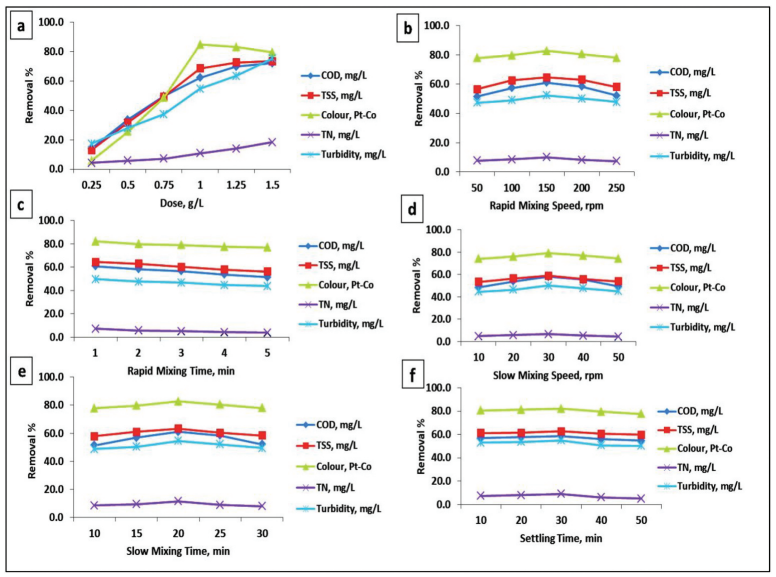
This study investigates the feasibility of applying coagulation/flocculation process for real textile wastewater treatment. Batch experiments were performed to detect the optimum performance of four different coagulants; Ferric Sulphate (Fe2(SO4)3), Aluminium Chloride (AlCl3), Aluminium Sulphate (Al2(SO4)3) and Ferric Chloride (FeCl3) at diverse ranges of pH (1–11) on the removal of chemical oxygen demand (COD), total suspended solids (TSS), colour, total nitrogen (TN) and turbidity from real textile wastewater. At pH 9, FeCl3 demonstrated the most effective removal for all studied
Characterization of Shear Strength and Compressibility of Diesel Contaminated Sand
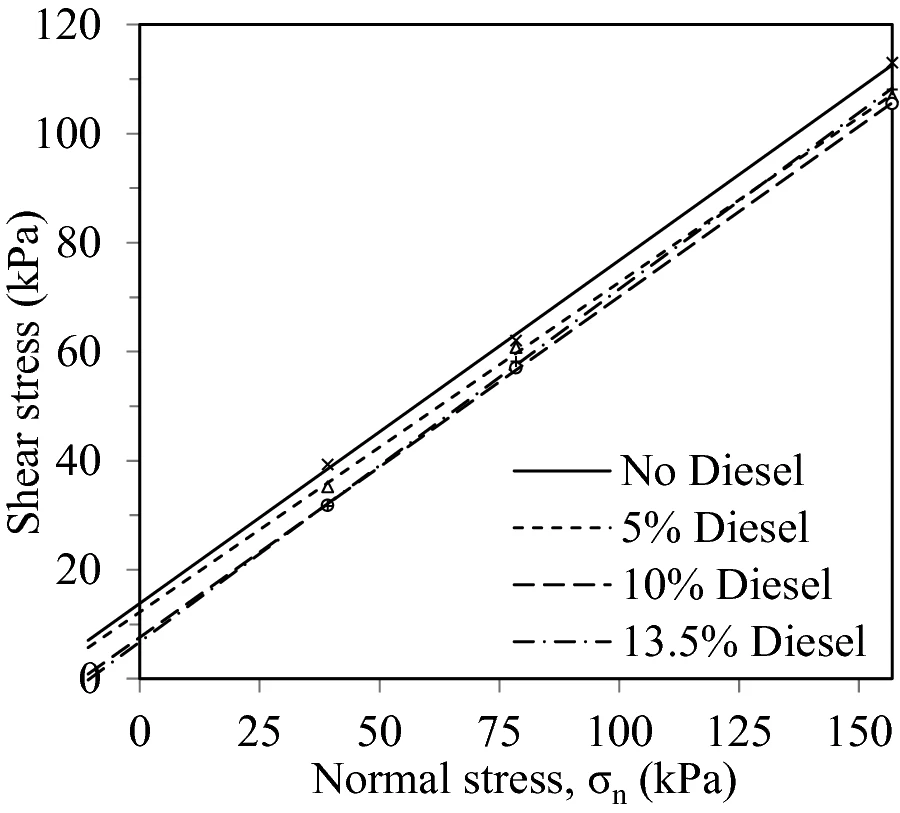
Soil contamination with petroleum products and/or waste are a problem that can be detected nearby industrial areas and other amenities that include underground leaking tanks or pipelines. The negative effect of oil contamination on the soil properties is significant and can completely alter the strength as well as the serviceability limit states of the bearing stratum. In this study, Diesel was mixed with cohesionless soils using four different mixing percentages, starting with 5% up to 13.5% by weight, to cover a wide range of contamination ratios. The effects of contamination on the soil
Application of nano waste particles in concrete for sustainable construction: a comparative study
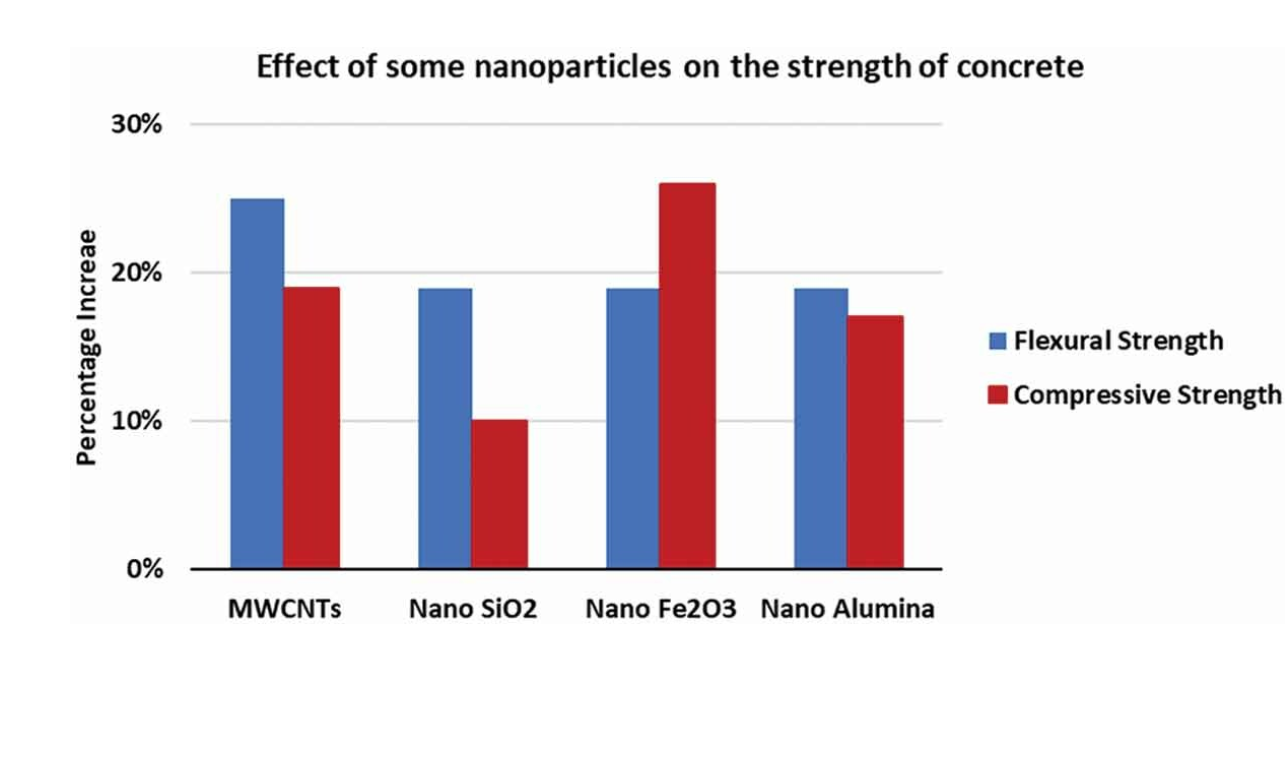
Nano particles contribute as a partial substitute in the production of eco-friendly building materials. This research presents a quantitative assessment of the sustainability effect of partially replacing cement in the green concrete mix with two types of nano-waste particles. The assessment is achieved using two weighing criteria developed by a Sustainable Decision Support System (SDSS) model. This assesses the alternatives using scoring systems based on both the Life Cycle Assessment (LCA) technique and Multi-Criteria decision analysis method. Ten sustainable aspects comprising four
EPS inclusion to reduce vertical stresses on shallow tunnels
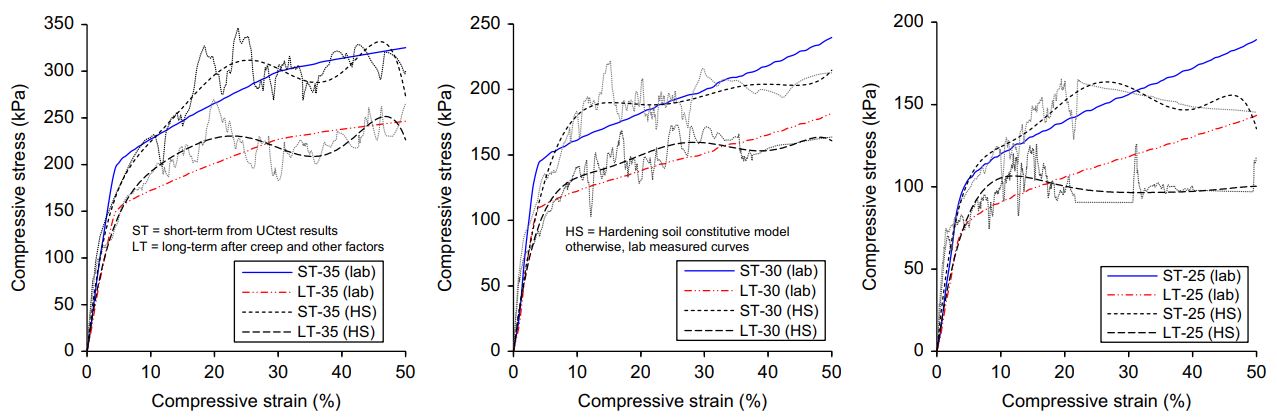
Expanded polystyrene (EPS) has long been used to reduce stresses acting on buried structures. In this study, the efficiency of utilising EPS in reducing vertical stresses acting on cut-and-cover tunnels was investigated. To gauge this, short- and long-term shear strength parameters of EPS with densities of 25, 30, and 35 kg/m3 were determined. Interface friction of EPS with various materials was measured considering the use of geotextile as a protective cover for EPS. Laboratory testing included unconfined compression, creep strain based on time-temperature-stress superposition, and modified