
Frational Order Inverse Filters Based on CCII Family
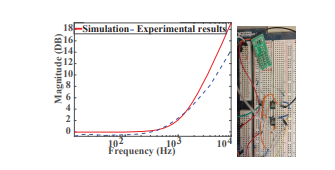
This paper proposes two generalized topologies of fractional order inverse filters (FOIF). All possible realizations of each topology are investigated using the second generation current conveyor (CCII) family. Inverse fractional highpass (IFHPF), inverse fractional bandpass (IFBPF), and inverse fractional lowpass (IFLPF) filters are realized using the same topology based on the generalized admittances. Numerical and P-Spice simulation results are presented for selected cases to approve the theoretical findings. The fractional order parameters increase the design flexibility and
Performance assessment of prepared polyamide thin film composite membrane for desalination of saline groundwater at Mersa Alam-Ras Banas, Red Sea Coast, Egypt
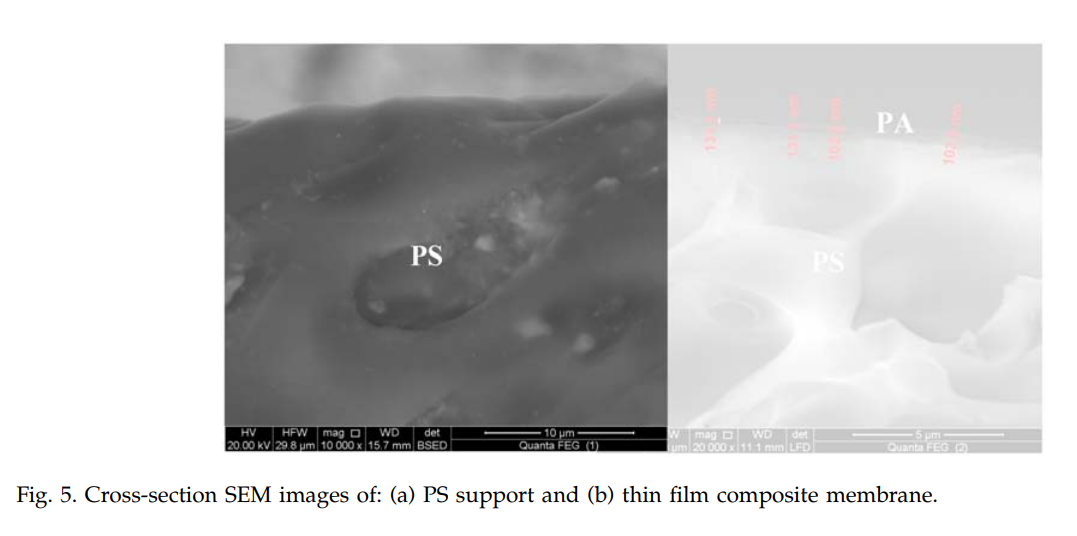
This study aims to enhance the performance of the flat sheet thin-film composite (TFC) polyamide-polysulfone reverse osmosis (RO) membranes. Composite RO membranes with high salt rejection were fabricated by treating a porous polysulfone (PS) support sequentially with a di-amine and then with a polyfunctional acid chloride, thereby forming a thin film of polyamide (PA) on the PS support. In order to establish conditions for the development of suitable thin-film composite (PS/TFC) membranes, various parametric studies were carried out which included varying the concentration of reactants

One-step thermolysis synthesis of divalent transition metal ions monodoped and tridoped CdS and ZnS luminescent nanomaterials
Mn2+, Co2+, or Ni2+ monodoped CdS (or ZnS) and Mn2+-Co2+-Ni2+ tridoped CdS (or ZnS) have been successfully synthesized by novel one-step thermolysis method using thiourea as a sulphur source. The synthesized nanomaterials were characterized by X-ray diffraction (XRD), transmission electron microscopy (TEM), and scanning electron microscopy (SEM). It is found that the average diameter and morphology of the synthesized samples varied with the nature of dopant ion. The successful doping of Mn2+-Co2+-Ni2+ tridoped ions into the host CdS (or ZnS) was proved by the EDX spectra. The luminescence of
Soft, Self-Assembly Liquid Crystalline Nanocomposite for Superior Switching
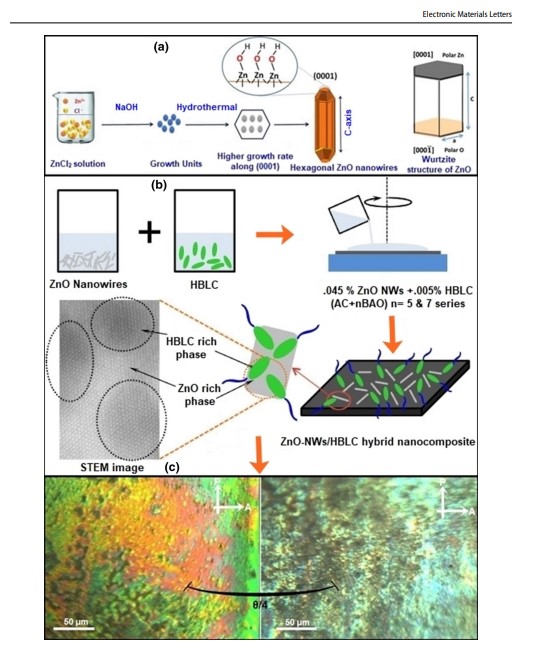
Abstract: Liquid crystal (LC) has long been a feature in Materials Science and Nanotechnology, have recently been extended into the appealing domain of complex hybrid materials. The crystalline structural effects of alkoxy chain lengths and the mesogen properties of hydrogen-bonded (n-OBASA) complexes (n = 5,6,7) have been investigated in recent studies. The LC-based hybrid nanocomposite materials–obtained by the homogeneous dispersion of zinc oxide nanowires (ZnO NWs) as a dopant into hydrogen-bonded liquid-crystalline compounds—seem to be particularly promising in this article. Optimizing
Phytosynthesis of Au, Ag, and Au-Ag bimetallic nanoparticles using aqueous extract of sago pondweed (Potamogeton pectinatus L.)
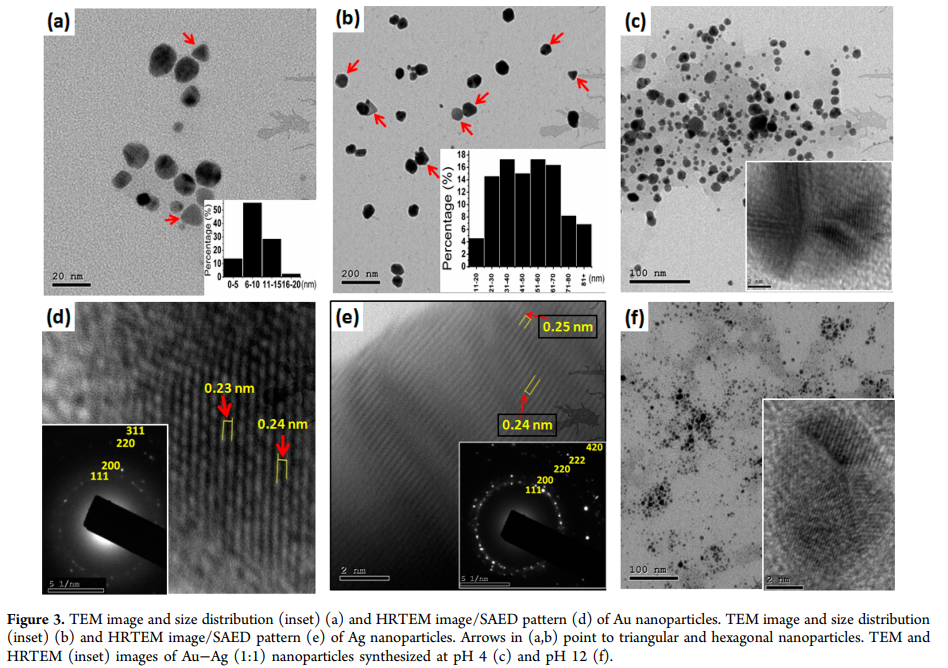
A green and facile method for the synthesis of Au, Ag, and Au-Ag bimetallic nanoparticles was developed using the aqueous extract of sago pondweed (Potamogeton pectinatus L.). Size, morphology, crystallinity, composition, capping layer, and stability of the synthesized nanoparticles were all investigated. The effect of the synthesis variables on the nanoparticles was also studied. Results showed that the synthesized nanoparticles were mostly spherical in shape, although other shapes as nanotriangles and hexagons were occasionally observed. Alloy-type Au-Ag nanoparticles could be synthesized at
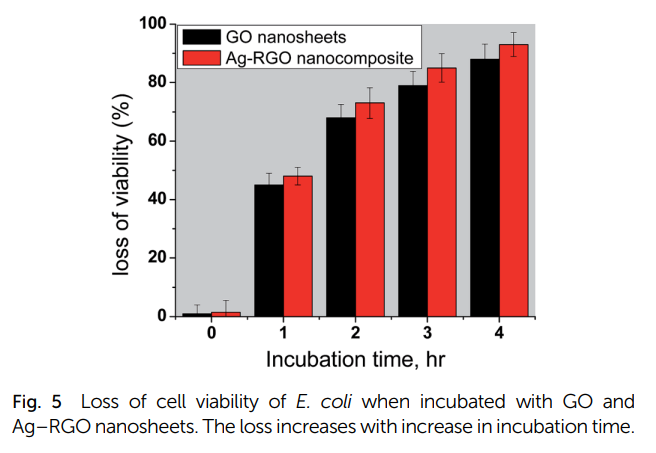
Phytosynthesis of silver-reduced graphene oxide (Ag-RGO) nanocomposite with an enhanced antibacterial effect using Potamogeton pectinatus extract
A new green synthesis method for the preparation of a silver-reduced graphene oxide (Ag-RGO) nanocomposite using Potamogeton pectinatus (Po) plant extract is introduced. The size, morphology and crystallinity of the as-prepared nanomaterials were studied with an explanation for the role of Po in the synthesis. A preliminary antibacterial experiment was developed to ensure the enhanced antibacterial effect of the Ag-RGO nanocomposite. The antibacterial measurements were done using the colony counting method. The results indicated that the majority of the silver nanoparticles "AgNPs" were formed

MoS2-based nanocomposites: synthesis, structure, and applications in water remediation and energy storage: a review
The world is currently facing critical water and energy issues due to the growing population and industrialization, calling for methods to obtain potable water, e.g., by photocatalysis, and to convert solar energy into fuels such as chemical or electrical energy, then storing this energy. Energy storage has been recently improved by using electrochemical capacitors and ion batteries. Research is actually focusing on the synthesis of materials and hybrids displaying improved electronic, physiochemical, electrical, and optical properties. Here, we review molybdenum disulfide (MoS2) materials and
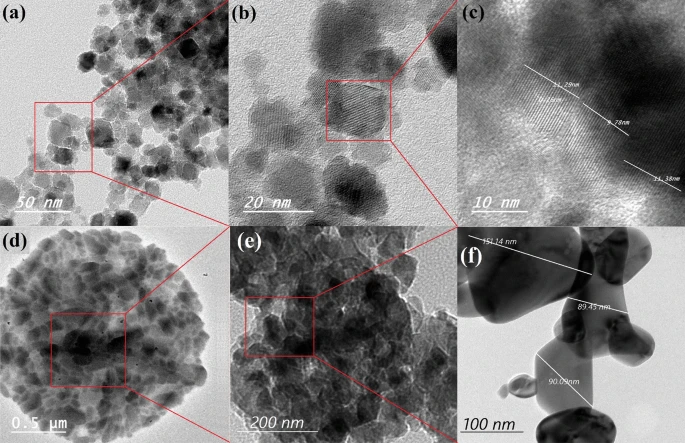
Novel (MnO2/Al) thermite colloid: an opportunity for energetic systems with enhanced performance
The current study highlights a sustainable fabrication of nanoscopic thermite (MnO2/Al) system, composed of MnO2 nanoparticles with an average particle size of about 20.8 nm prepared by a hydrothermal processing technique. In addition, it contains aluminium particles having a combustion heat of 32,000 J/g, which is very attractive for advanced energetic systems. Plate-like aluminium nanoparticles with an average particle size of 100 nm were developed by wet milling. Our results revealed aluminium optimum solid loading in tri-nitrotoulene (TNT), which was found to be 8.0 wt%. At this optimum
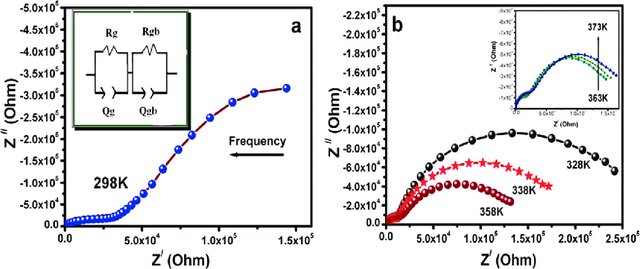
Unveiling the Effect of Zn2+ Substitution in Enrichment of Structural, Magnetic, and Dielectric Properties of Cobalt Ferrite
This work reports the detailed structural characterization of Zn2+ ion-substituted cobalt ferrite nanoparticles (CFO NPs; Co1−xZnxFe2O4; x = 0.00, 0.25, 0.50, and 0.75), prepared using a facile sol–gel method. It correlates structural changes with magnetic and dielectric properties. The as-synthesized samples were investigated by X-ray diffraction (XRD) analysis, BET surface area analyzer, energy-dispersive X-ray (EDX), Fourier transform infrared (FTIR), scanning electron microscopy (SEM), vibrating sample magnetometer (VSM), Mössbauer spectroscopy, and impedance analyzer. The pristine sample
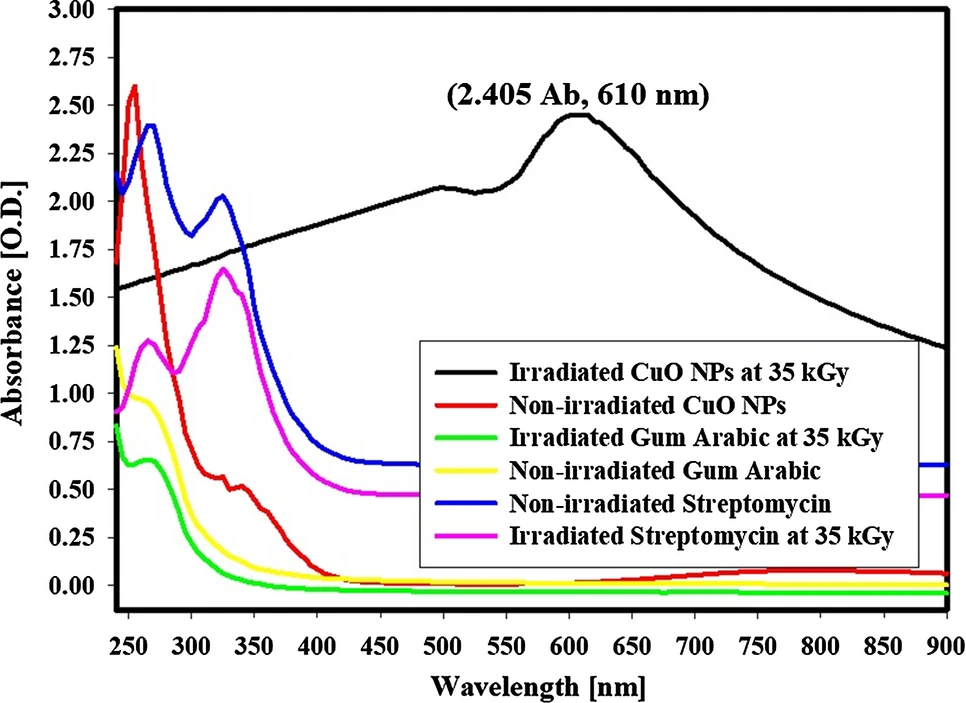
Protective Role of Copper Oxide-Streptomycin Nano-drug Against Potato Brown Rot Disease Caused by Ralstonia solanacearum
Potato plants can be infected by different bacterial diseases, among them, the potato brown rot disease, caused by Ralstonia solanacearum. The novelty of the present research is to assess the potential impact of the synthesized copper oxide NPs (CuO NPs)-streptomycin nano-drug synthesized by gamma irradiation for inducing the systemic resistance against potato brown rot disease. CuO NPs-streptomycin was completely-characterized by UV–Vis., XRD, FTIR, HRTEM, SEM, and EDX elemental analysis. In the greenhouse experiment, the efficiency of CuO NPs was tested after three times of application