
Influence of Periodic Surface Nanopatterning Profiles on Series Resistance in Thin-Film Crystalline Silicon Heterojunction Solar Cells
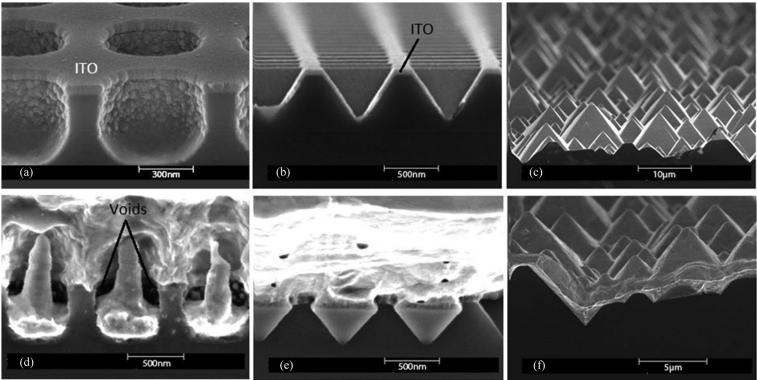
In the frame of the development of thin crystalline silicon solar cell technologies, surface nanopatterning of silicon is gaining importance. Its impact on the material quality is, however, not yet fully controlled.We investigate here the influence of surface nanotexturing on the series resistance of a contacting scheme relevant for thin-film crystalline silicon heterojunction solar cells. Twodimensional periodic nanotextures are fabricated using a combination of nanoimprint lithography and either dry or wet etching, while random pyramid texturing is used for benchmarking. We compare these

Multistep deposition of Cu2Si(S,Se)3 and Cu2ZnSiSe4high band gap absorber materials for thin film solar cells
Cu2ZnSi(S,Se)4 and Cu2Si(S,Se)3 are potential materials to obtain cost effective high band gap absorbers for tandem thin film solar cell devices. A method to synthesize Cu2SiS3, Cu2SiSe3and Cu2ZnSiSe4thin film absorbers is proposed. This method is based on a multistep process, using sequential deposition and annealing processes. X-ray diffraction analysis performed on the final thin films have confirmed the presence of the Cu2Si(S,Se)3 and Cu2ZnSiSe4phases. Scanning electron microscopy images revealed the formation of polycrystalline layers with grains size up to 1 μm. The band gap of the
Optimizing budget allocation for condition assessment of water and sewer infrastructures
Much research has focused on the development of optimal strategies for rehabilitation and replacement of water and sewer infrastructures. Condition assessment is an integral component in any asset management program for assessing the asset physical condition. Determining the condition of buried infrastructure tends to be cumbersome, costly and error-prone. As such, decision makers must balance the value of obtained information through condition assessments with the cost of obtaining this information. Such decisions must balance between conflicting needs and need to consider the sought level of

A system model for green manufacturing
Manufacturing systems evolution is afunction in multiple external and internal factors. With today's global awareness of environmental risks as well as the pressing needs to compete through efficiency, manufacturing systems are evolving into a new paradigm. This paper presents a system model for the new green manufacturing paradigm. The model captures various planning activities to migrate from a less green into a greener and more eco-efficient manufacturing. The various planning stages are accompanied by the required control metrics as well as various green tools in an open mixed architecture
Investigation of properties limiting efficiency in Cu2ZnSnSe4-based solar cells
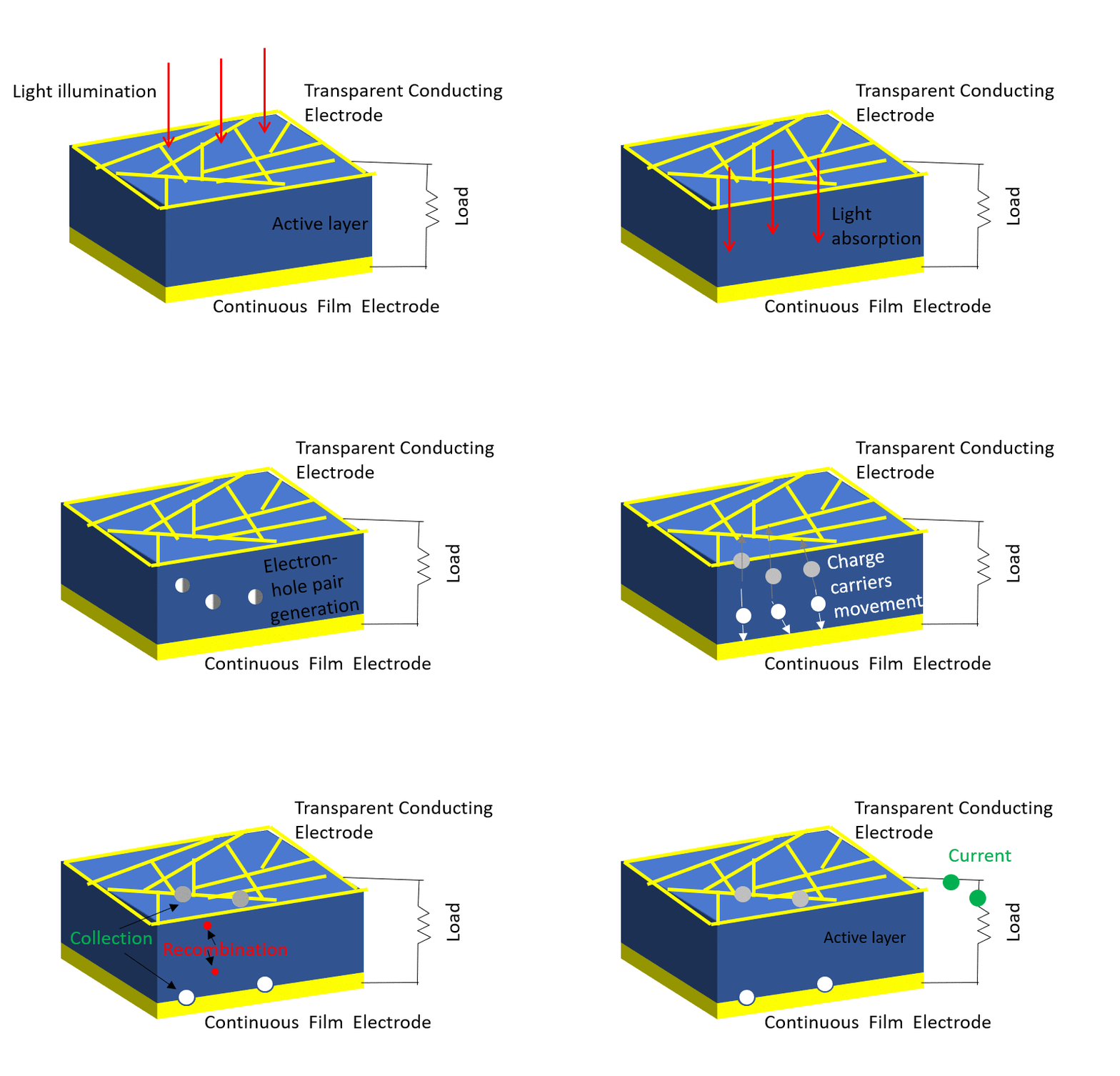
We have investigated different nonidealities in Cu2ZnSnSe4-CdS-ZnO solar cells with 9.7% conversion efficiency, in order to determine what is limiting the efficiency of these devices. Several nonidealities could be observed. A barrier of about 300 meV is present for electron flow at the absorber-buffer heterojunction leading to a strong crossover behavior between dark and illuminated current-voltage curves. In addition, a barrier of about 130 meV is present at the Mo-absorber contact, which could be reduced to 15 meV by inclusion of a TiN interlayer. Admittance spectroscopy results on the
Left ventricular diastolic function in type 2 diabetes mellitus is associated with myocardial triglyceride content but not with impaired myocardial perfusion reserve
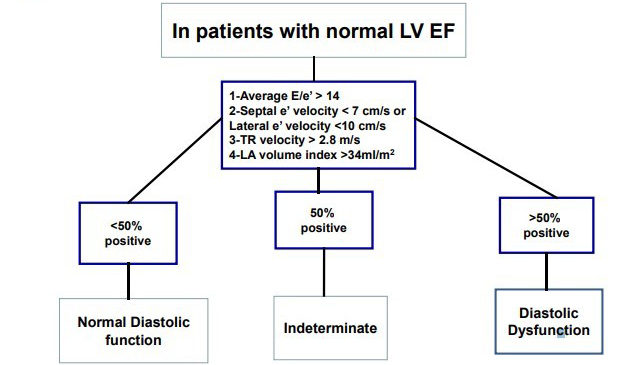
Purpose: To study myocardial perfusion reserve and myocellular metabolic alterations indicated by triglyceride content as possible causes of diastolic dysfunction in patients with type 2 diabetes mellitus, preserved systolic function, and without clinically evident coronary artery disease. Materials and Methods: Patients with type 2 diabetes mellitus (n = 42) underwent cardiac magnetic resonance (CMR) for quantification of 1) myocardial contractility by strain-encoded MR (SENC); 2) myocardial triglyceride content by proton magnetic resonance spectroscopy ( 1H-MRS); and 3) myocardial perfusion
Combined effect of wind speed and covering irrigation canals on water quality parameters
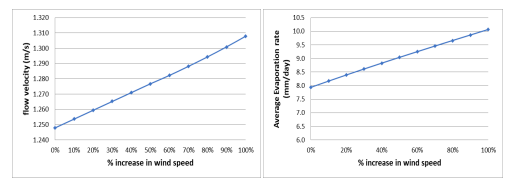
Wind has a considerable effect on many water quality parameters. Some of the parameters are directly affected by the wind, while others are influenced by other physical water parameters like the velocity, temperature. etc. that are affected by wind and hence transfer their effect to water quality parameters. As the wind has an effect on water quality parameters, also covering waterways has a great effect on the water quality of those covered waterways. This is because covering a waterway alters the concentrations of its water quality parameters. This research is concerned with studying the
Combined effect of wind speed and covering irrigation canals on water quality parameters
Wind has a considerable effect on many water quality parameters. Some of the parameters are directly affected by the wind, while others are influenced by other physical water parameters like the velocity, temperature. etc.That are affected by wind and hence transfer their effect to water quality parameters. As the wind has an effect on water quality parameters, also covering waterways has a great effect on the water quality of those covered waterways. This is because covering a waterway alters the concentrations of its water quality parameters. This research is concerned with studying the
Towards optimum condition assessment policies for water and sewer networks
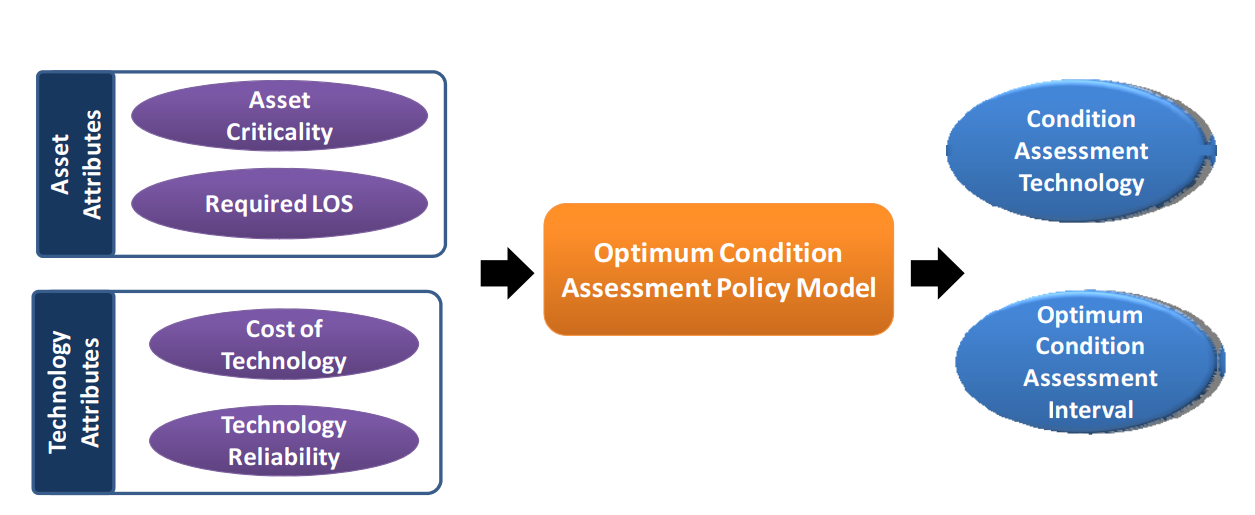
With ageing water and sewer infrastructure in North America, assessing the condition of these assets has received increased attention in the past few years. Condition assessment is an integral component in any asset management program. Determining the condition of buried infrastructure tends to be more cumbersome, costly and error-prone compared to other surface infrastructure like roads and buildings. For sewers, CCTV is considered the industry standard for condition assessment technologies. For pressurized water pipelines, technologies tend to be more costly and uncertain (e.g
Multiobjective genetic algorithm to allocate budgetary resources for condition assessment of water and sewer networks
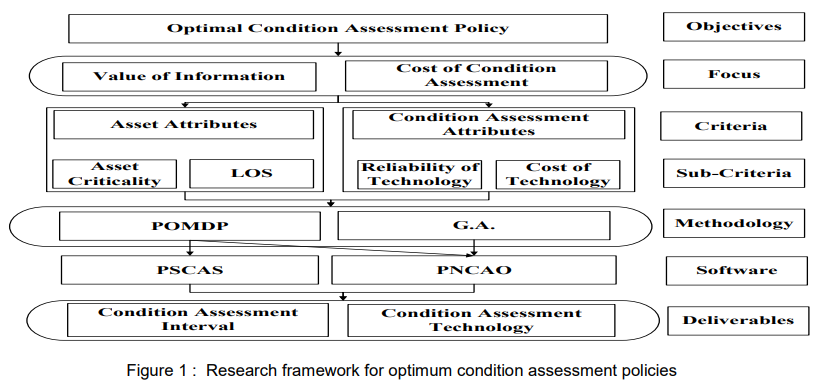
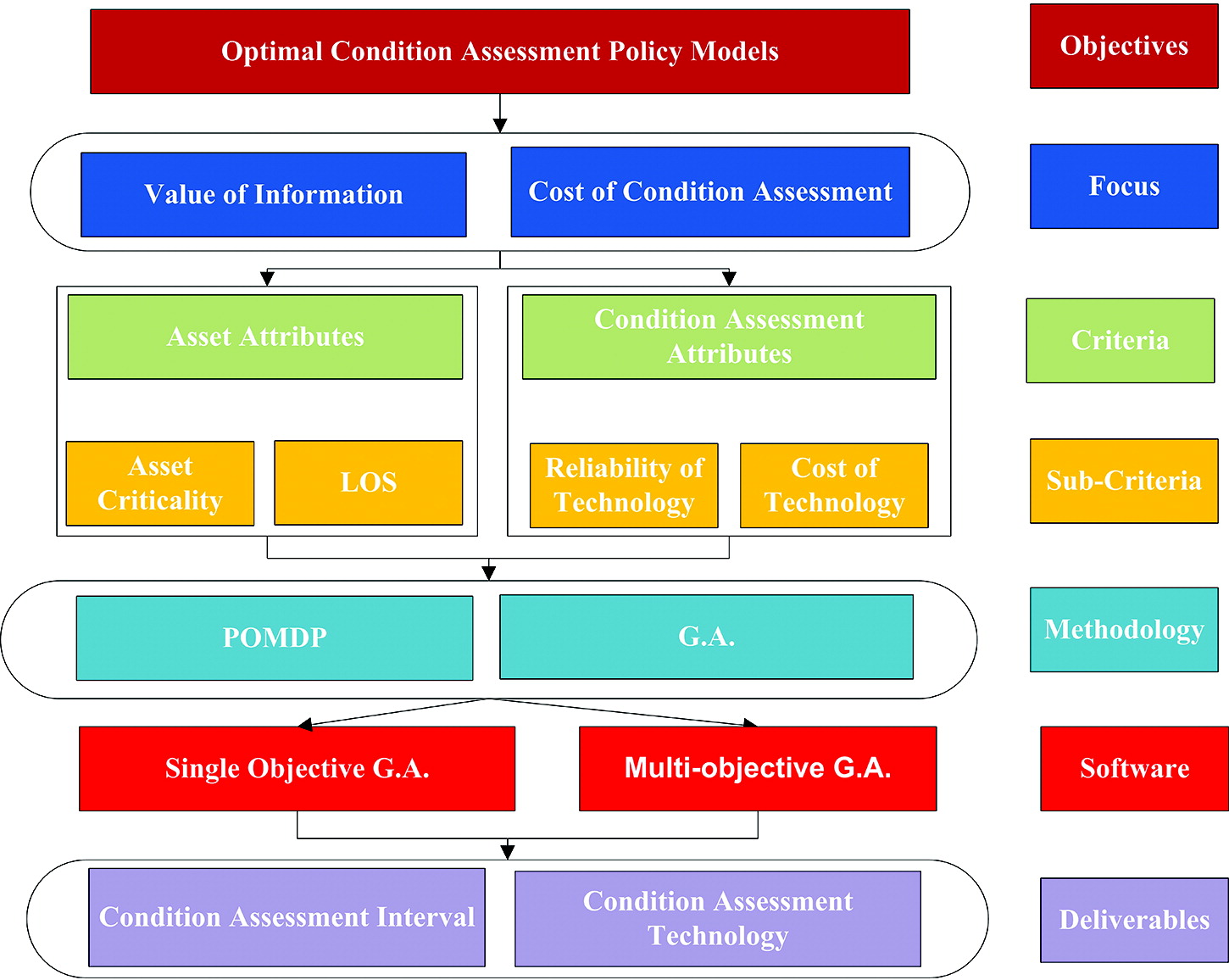
This paper presents a framework for optimizing condition assessment policies by balancing the revealed value of information with the cost of obtaining such information. The computational platform is based on augmenting the asset condition state with an expected level of accuracy. Inaccuracies due to condition assessment reliability are evaluated using the partially observable Markov decision process. The single objective genetic algorithm is used to select the most cost-effective assets to assess considering information inaccuracy under a fixed budget. The model is extended using