
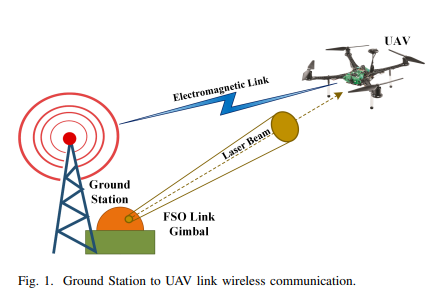
Design and Analysis of A Reliable Quadcopter UAV for Wireless Communication Purposes
Unmanned aerial vehicles (UAVs) are used for a wide range of applications, including wireless communication systems, which have the potential to provide cost-effective wireless connectivity for a wide variety of applications. The present UAV models lack the flexibility needed to carry the mission's varied payloads. As a result, appropriate design and analysis of the UAV structure are essential. This work presents a complete design and analysis of a quadcopter UAV for wireless communications purposes, which is carried out using computer-aided design (CAD) tools and techniques. Several design
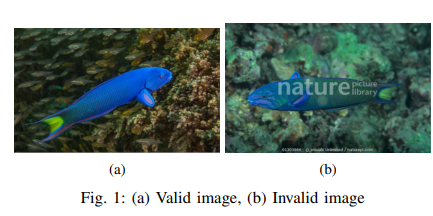
Real-Time Fish Detection Approach on Self-Built Dataset Based on YOLOv3
Creating a model to detect freely moving fish underwater in real-time is a challenging process for two main reasons. First, the available datasets suffer from some limitations that severely affect the results of the detection models operating in challenging and blurry environments. These models should be able to capture all of the fish movement given different types of surroundings. Second, choosing the convenient detection model system which matches the desired requirements from having high accuracy with satisfying frames per second (FPS). To overcome the first challenge, a new dataset was
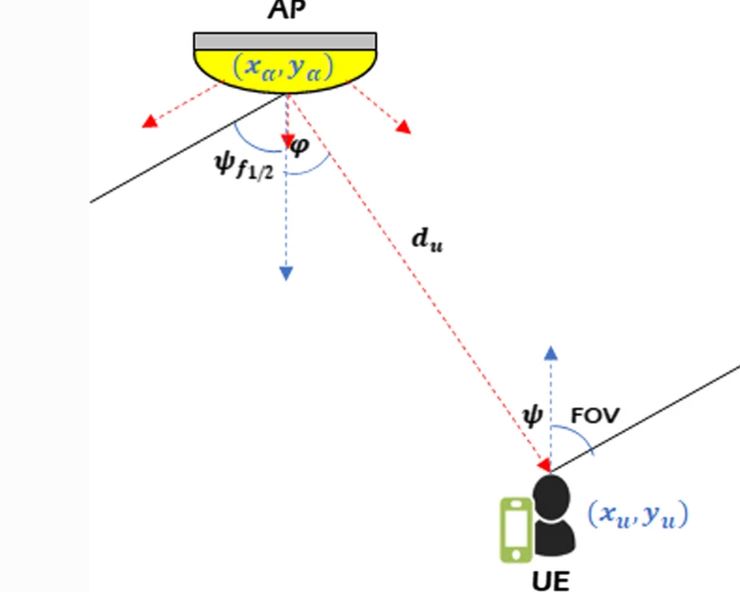
Hybrid NOMA-based ACO-FBMC/OQAM for next-generation indoor optical wireless communications using LiFi technology
Light fidelity (LiFi) has successfully achieved high data transfer rates, high security, great availability, and low interference. In this paper, we propose a LiFi system consisting of a combination of non-orthogonal multi-access (NOMA), asymmetrically-clipped optical (ACO), and filter bank multicarrier (FBMC) techniques combined with offset quadrature amplitude modulation (OQAM). The paper also applies a μ-law companding approach for a high peak to average power ratio (PAPR) reduction of the FBMC/OQAM scheme. The combination of NOMA, ACO-FBMC/OQAM, and μ-law companding allows a significant
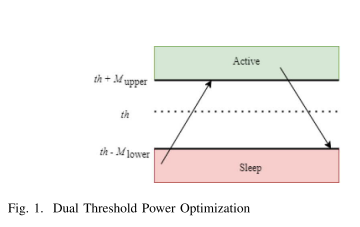
Optimal Power Consumption on Distributed Edge Services Under Non-Uniform Traffic with Dual Threshold Sleep/Active Control
Mobile edge computing (MEC) is a key enabling technology for supporting high-speed and low latency services in the fifth generation (5G) and beyond networks. MEC paradigm moves computational resources from centralized cloud servers towards the edge of the network, nearer to the users. However, edge computation resources increase the power consumption of the network. Moreover, the non-uniform traffic load on the edge servers causes resources to be underutilized and decrease the system's power efficiency. To achieve the green networking concept encouraged in 5G and beyond networks, unused MEC

Investigation of root causes of order unfulfillment: A Logistics case study
This study targets an order fulfillment problem in a freight forwarding company. Some applicable solutions are implemented such as supplier performance evaluation, suppliers' selection, and location analytics. The objective of the study is to reduce the number of unfulfilled orders by supply planning. Some of the tools used to achieve this are Excel (VBA and Pivot tables) to perform drivers' scoring, analytic hierarchy process (AHP), and ArcGIS software to visualize locations. The results showed that the company can implement the suggested solutions to reduce the number of order cancellations
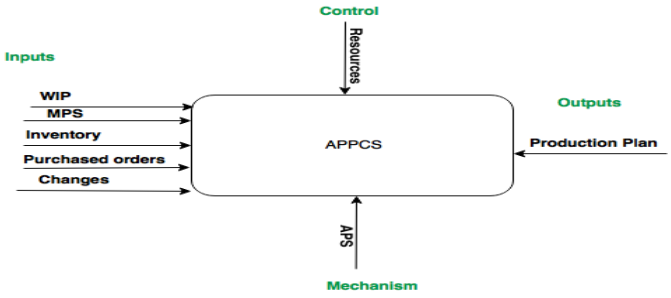
Modeling the Production Planning and Control System using UML
Production planning and control systems are known for their complexity, especially for large scale production units. The Unified Modeling Language (UML) is known for its efficiency in modeling such complex systems for better visualization and as an initial step for software implementation. In this paper, UML is utilized to model production planning and control systems. The models developed include functional, and behavioral models represented through a use case diagram, an activity diagram, and a communication diagram. The proposed models serve as the first step towards implementing a software
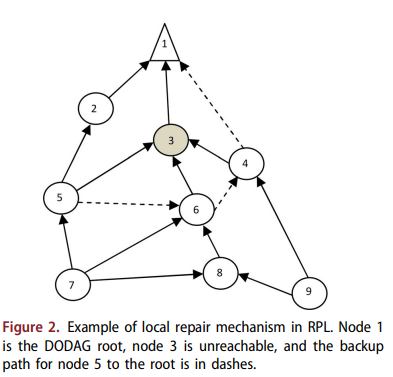
Optimal proactive monitor placement & scheduling for IoT networks
This work is fulfilled in the context of the optimized monitoring of Internet of Things (IoT) networks. IoT networks are faulty; Things are resource-constrained in terms of energy and computational capabilities; they are also connected via lossy links. For IoT systems performing a critical mission, it is crucial to ensure connectivity, availability, and network reliability, which requires proactive network monitoring. The idea is to oversee the network state and functioning of the nodes and links; to ensure the early detection of faults and decrease node-unreachability times. It is imperative
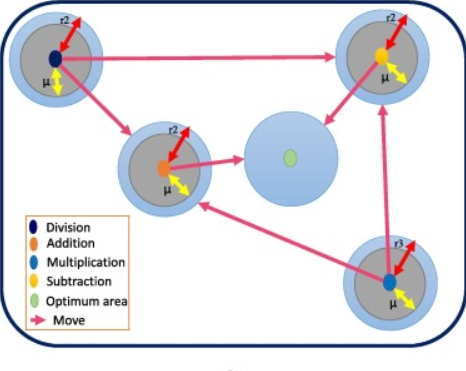
Arithmetic optimization approach for parameters identification of different PV diode models with FOPI-MPPT
The Maximum Power Point Tracker (MPPT) provides the most efficient use of a Photo-voltaic system independent of irradiance or temperature fluctuations. This paper introduces the modeling and control of a photo-voltaic system operating at MPPT using the arithmetic optimization algorithm (AOA). The single and double Photo-voltaic models are investigated. Their optimal unknown parameters are extracted using AOA based on commercial Photo-voltaic datasheets. A comparison is performed between these optimal parameters extracted by AOA and other optimization techniques presented in the literature

Multi-view human action recognition system employing 2DPCA
A novel algorithm for view-invariant human action recognition is presented. This approach is based on Two-Dimensional Principal Component Analysis (2DPCA) applied directly on the Motion Energy Image (MEI) or the Motion History Image (MHI) in both the spatial domain and the transform domain. This method reduces the computational complexity by a factor of at least 66, achieving the highest recognition accuracy per camera, while maintaining minimum storage requirements, compared with the most recent reports in the field. Experimental results performed on the Weizmann action and the INIRIA IXMAS
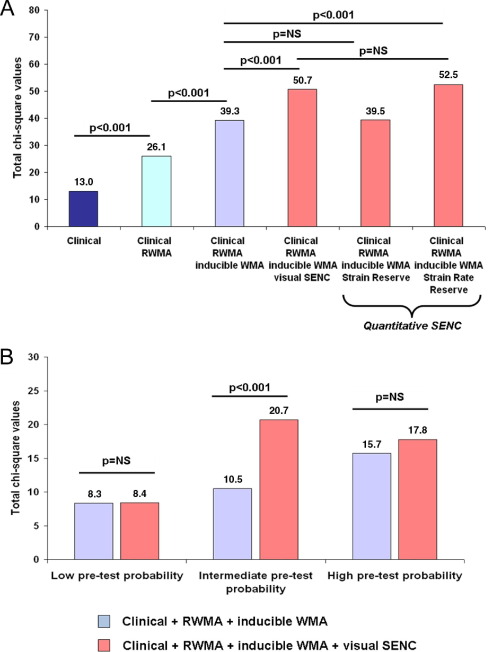
Strain-encoded cardiac magnetic resonance during high-dose dobutamine stress testing for the estimation of cardiac outcomes: Comparison to Clinical Parameters and Conventional Wall Motion Readings
Objectives: The purpose of this study was to determine the prognostic value of strain-encoded magnetic resonance imaging (SENC) during high-dose dobutamine stress cardiac magnetic resonance imaging (DS-MRI) compared with conventional wall motion readings. Background: Detection of inducible ischemia by DS-MRI on the basis of assessing cine images is subjective and depends on the experience of the readers, which may influence not only the diagnostic classification but also the risk stratification of patients with ischemic heart disease. Methods: In all, 320 consecutive patients with suspected or