
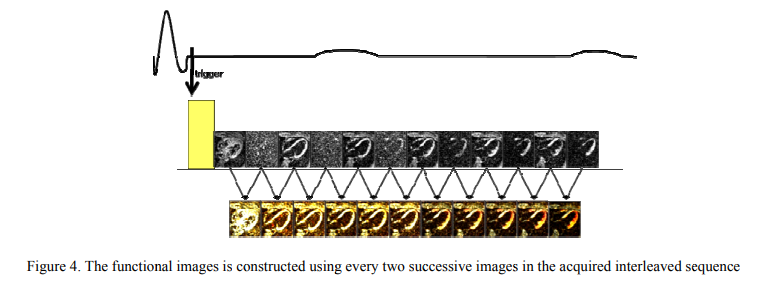
Strain correction in interleaved strain-encoded (SENC) cardiac MR
The strain encoding (SENC) technique directly encodes regional strain of the heart into the acquired MR images and produces two images with two different tunings so that longitudinal strain, on the short-axis view, or circumferential strain on the long-axis view, are measured. Interleaving acquisition is used to shorten the acquisition time of the two tuned images by 50%, but it suffers from errors in the strain calculations due to inter-tunings motion of the heart. In this work, we propose a method to correct for the inter-tunings motion by estimating the motion-induced shift in the spatial
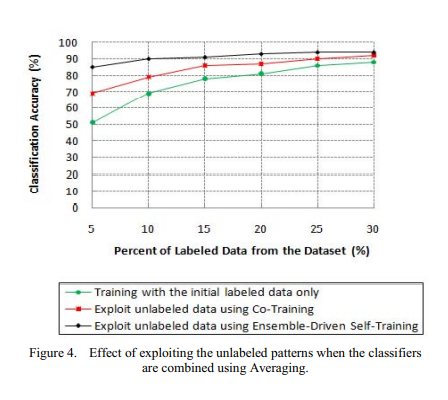
A semi-supervised learning approach for soft labeled data
In some machine learning applications using soft labels is more useful and informative than crisp labels. Soft labels indicate the degree of membership of the training data to the given classes. Often only a small number of labeled data is available while unlabeled data is abundant. Therefore, it is important to make use of unlabeled data. In this paper we propose an approach for Fuzzy-Input Fuzzy-Output classification in which the classifier can learn with soft-labeled data and can also produce degree of belongingness to classes as an output for each pattern. Particularly, we investigate the
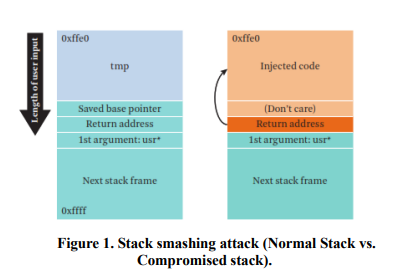
Survey of Code Reuse Attacks and Comparison of Mitigation Techniques
Code-Reuse Attacks (CRAs) are solid mechanisms to bypass advanced software and hardware defenses. Due to vulnerabilities found in software which allows attackers to corrupt the memory space of the vulnerable software to modify maliciously the contents of the memory; hence controlling the software to be able to run arbitrary code. The CRAs defenses either prevents the attacker from reading program code, controlling program memory space directly or indirectly through the usage of pointers. This paper provides a thorough evaluation of the current mitigation techniques against CRAs with regards to
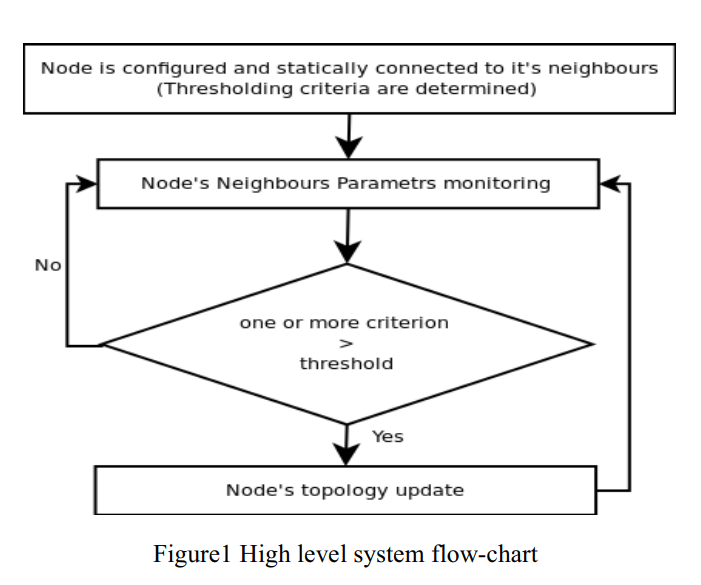
Janitor, certificate and jury (JCJ): Trust scheme for wireless ad-hoc networks
Ad hoc networks are peer mobile nodes that self configure to form a network. In these types of networks there is no routing infrastructure, and usually nodes have limited resources. This imposes a serious problem due to some nodes' selfishness and willingness to preserve their resources. Many approaches have been proposed to deal with this problem and mitigate the selfishness; amongst these approaches are reputation systems. This paper proposes a reputation system scheme that helps isolating misbehaving nodes and decreasing their ability to launch an attack on the network. The idea of this
Computing the burrows-wheeler transform of a string and its reverse
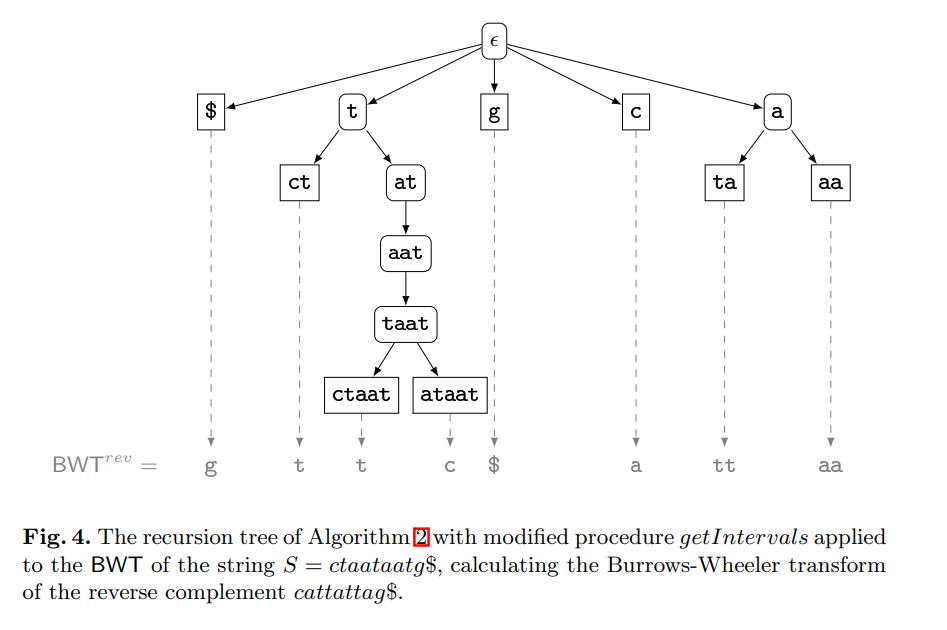
The contribution of this paper is twofold. First, we provide new theoretical insights into the relationship between a string and its reverse: If the Burrows-Wheeler transform (BWT) of a string has been computed by sorting its suffixes, then the BWT and the longest common prefix array of the reverse string can be derived from it without suffix sorting. Furthermore, we show that the longest common prefix arrays of a string and its reverse are permutations of each other. Second, we provide a parallel algorithm that, given the BWT of a string, computes the BWT of its reverse much faster than all
Bivariate Double Density Discrete Wavelet for Enhanced Image Denoising
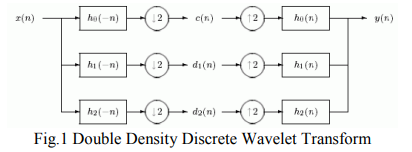
Image denoising is of paramount importance in image processing. In this paper, we propose a new design technique for the design of Double density Discrete Wavelet Transform (DD DWT) AND DD CWT filter bank structure. These filter banks satisfy the perfect reconstruction as well as alias free properties of the DWT. Next, we utilized this filter bank structure in image denoising. Our denoising scheme is based on utilizing the interscale correlation/interscale dependence between wavelet coefficients of a DD DWT of the noisy image. This is known as the Bivariate Shrinkage scheme. More precisely, we
Supporting bioinformatics applications with hybrid multi-cloud services
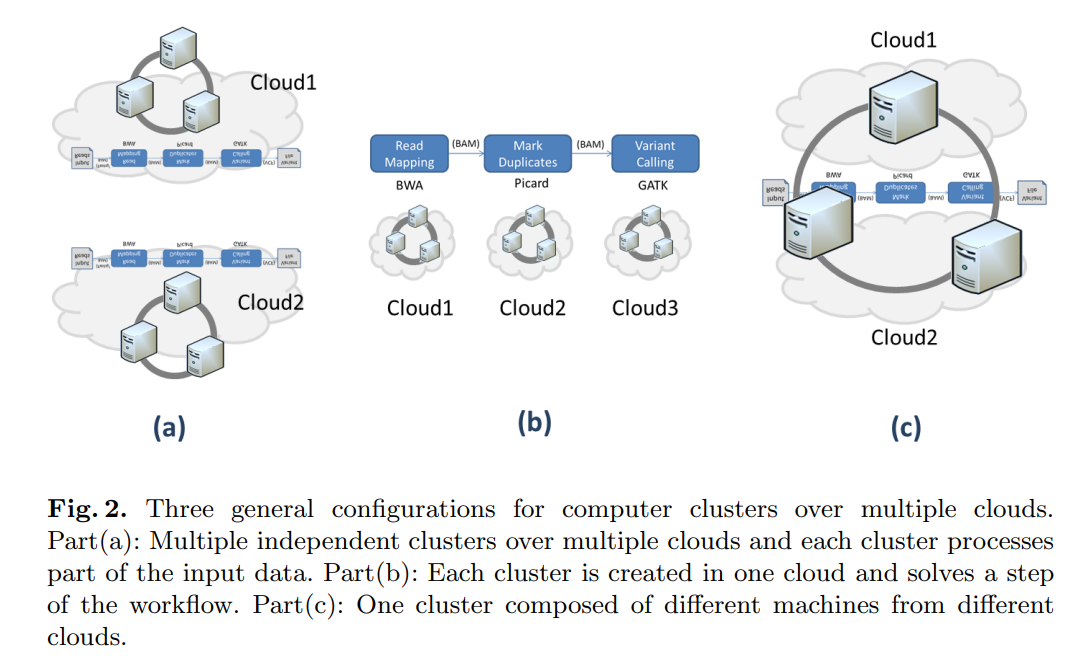
Cloud computing provides a promising solution to the big data problem associated with next generation sequencing applications. The increasing number of cloud service providers, who compete in terms of performance and price, is a clear indication of a growing market with high demand. However, current cloud computing based applications in bioinformatics do not profit from this progress, because they are still limited to just one cloud service provider. In this paper, we present different use case scenarios using hybrid services and resources from multiple cloud providers for bioinformatics
A dynamic system development method for startups migrate to c loud
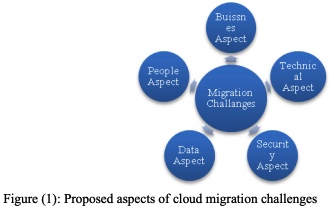
Cloud computing has become the most convenient environment for startups to run, build and deploy their products. Most startups work on availing platforms as a solution for problems related to education, health, traffic and others. Many of these platforms are mobile applications. With platforms as a service (PaaS), startups can provision their applications and gain access to a suite of IT infrastructure as their business needs. But, startups face many business and technical challenges to adapt rapidly to cloud computing. This paper helps startups to build a migration strategy. It discusses
Artificial intelligence for retail industry in Egypt: Challenges and opportunities
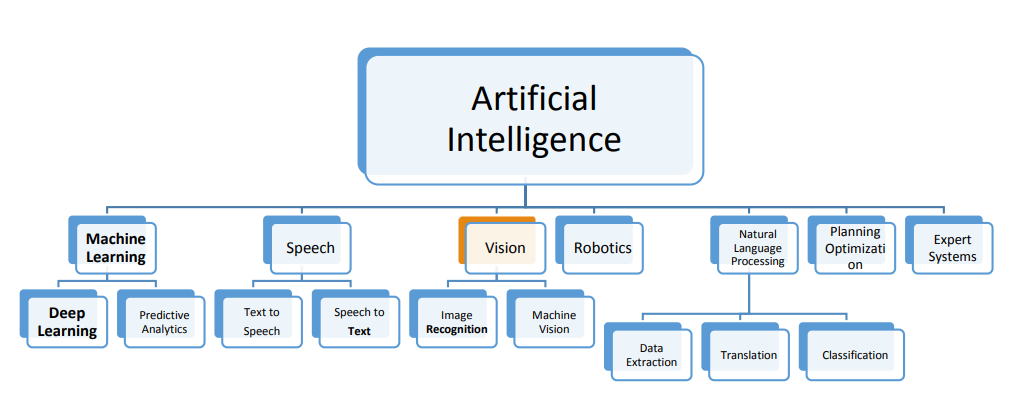
In the era of digital transformation, a mass disruption in the global industries have been detected. Big data, the Internet of Things (IoT) and Artificial Intelligence (AI) are just examples of technologies that are holding such digital disruptive power. On the other hand, retailing is a high-intensity competition and disruptive industry driving the global economy and the second largest globally in employment after the agriculture. AI has large potential to contribute to global economic activity and the biggest sector gains would be in retail. AI is the engine that is poised to drive the
Simplified modelling for power consumption of base station sites in mobile telecommunications systems
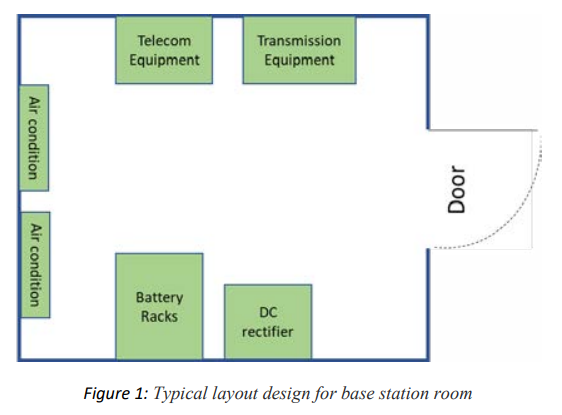
Reducing energy consumption is a global concern for all industries. Modern communications systems facilitate human interactions compared to previous ages. Telecommunications and IT are among the fast-growing industries with rapid demand for more energy. Moreover, the wide adoption of wireless mobile communications applications has resulted in installing massive numbers of Base Station (BS) sites to serve the rapid demand for wider mobile coverage and the growing need for more capacity and speed. These Base Stations are responsible for the major part of the energy needs of mobile wireless