

Fractional-order oscillator based on single CCII
This paper presents a generalization of well-known phase shift oscillator based on single CCII into the fractional order domain. The general state matrix, characteristic equation and design equations are presented. The general oscillation frequency, condition and the phase difference between the oscillatory outputs are introduced in terms of the fractional order parameters. These parameters add extra degrees of freedom which in turn increase the design flexibility and controllability. Numerical discussion of five special cases is investigated including the integer case. Spice simulations and

FPGA realization of Caputo and Grünwald-Letnikov operators
This paper proposes a hardware platform implementation on FPGA for two fractional-order derivative operators. The Grünwald-Letnikov and Caputo definitions are realized for different fractional orders. The realization is based on non-uniform segmentation algorithm with a variable lookup table. A generic implementation for Grünwald-Letnikov is proposed and a 32 bit Fixed Point Booth multiplier radix-4 is used for Caputo implementation. Carry look-ahead adder, multi-operand adder and booth multiplier are used to improve the performance and other techniques for area and delay minimization have

Fractional order four-phase oscillator based on double integrator topology
This paper presents a generalization of Soliman's four-phase oscillator into the fractional-order domain. The extra degrees of freedom provided by the fractional-order parameters α and β add more flexibility to the design of the circuit. The design procedure and equations of the proposed oscillator are presented and verified using Matlab and PSPICE. Also, the stability analysis for fractional order systems is studied for different cases of α and β. © 2017 IEEE.
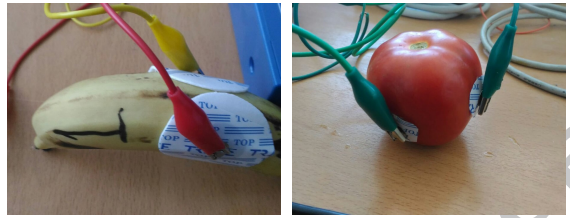
Biological inspired optimization algorithms for cole-impedance parameters identification
This paper introduces new meta-heuristic optimization algorithms for extracting the parameters of the Cole-impedance model. It is one of the most important models providing best fitting with the measured data. The proposed algorithms inspired by nature are known as Flower Pollination Algorithm (FPA) and Moth-Flame Optimizer (MFO). The algorithms are tested over sets of both simulated and experimental data. The results are compared with other fitting algorithms such as the Non-linear least square (NLS) and Bacterial Foraging Optimization (BFO). The comparison showed a better fit in the sum of

FPGA Implementation of X- and Heart-shapes Controllable Multi-Scroll Attractors
This paper proposes new multi-scrolls chaotic systems which is called the X-shape. The purpose is to have more complex systems and flexible ranges of the chaotic behavior. The proposed X-shape is a combination between V-shape and Λ-shape. This paper also represents the Heart-shape which considered a special case of the X-shape. The system complexity has been measured by MLE and compared with V-shape system. It shows lager MLE on the side of X-shape. In addition, the effect of changing system parameters has been discussed and compared with V-shape. Finally, a fully hardware implantation on FPGA

Comparison between three approximation methods on oscillator circuits
The promising capabilities of fractional-order devices challenge researchers to find a way to build it physically. Approximating the Laplacian operator sα can pave the way to emulate the fractional-order devices till its off-the-shelf appearance. This paper introduces three approximations of the Laplacian operator sα: Oustaloup, Matsuda, and Valsa by comparing their behaviors through two types of oscillator circuits. The first two are well-established approximations and the latter is proposed for the first time by converting its model network to an integer polynomial approximation of the

Fractional-Order Relaxation Oscillators Based on Op-Amp and OTRA
This paper introduces closed formulas of two topologies of fractional-order relaxation oscillators. One of these topologies is based on Operational Amplifier (Op-Amp) and the other one depends on Operational Operational Trans-Resistance Amplifier (OTRA). Special cases for each topology are also provided. The advantage of these designs comes from the added extra degree of freedom presented by the fractional-order α. Matsuda's approximation of sα is used to implement fractional-order capacitors. Also, experimental work is included to verify the theoretical results. © 2018 IEEE.

Fractional-order Nonminimum-phase Filter Design
This paper introduces the design procedure of the fractional-order Soliman Nonminimum-phase filter. Theoretical analysis has been carried out providing the critical frequencies of the filter. The effect of fractional-order parameter \alpha on the filter response has been investigated. Additionally, two different approximation techniques (Oustaloup and Matsuda) have been employed to realize the filter. A comparison is held between the exact and approximated solutions. Theoretical analysis is verified through circuit simulations and experimental work. © 2019 IEEE.
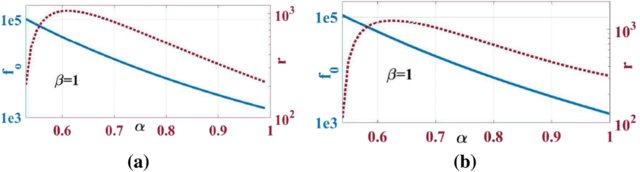
Two-port two impedances fractional order oscillators
This paper presents a study for general fractional order oscillator based on two port network where two topologies of oscillator structure with two impedances are discussed. The two impedances are chosen to be fractional elements which give four combinations for each topology. The general oscillation frequency, condition and the phase difference between the two oscillatory outputs are deduced in terms of the transmission matrix parameter of a general two port network. As a case study: two different networks are presented which are op-amp based circuit and non-ideal gyrator circuit. The
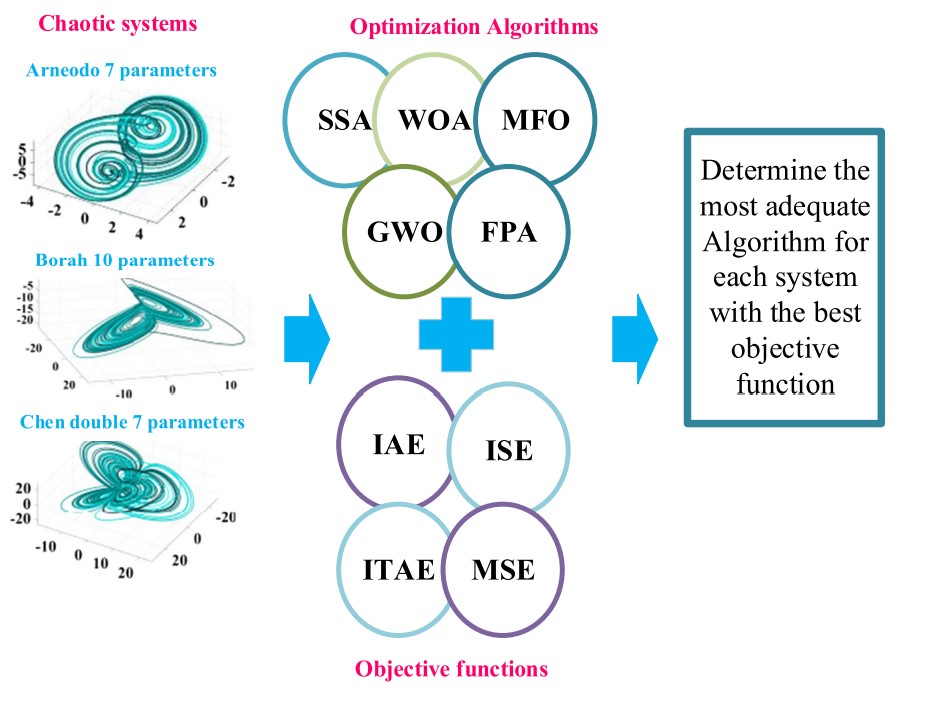
Parameter identification of fractional-order chaotic systems using different Meta-heuristic Optimization Algorithms
Fractional-order chaotic systems (FOCS) parameter identification is an essential issue in chaos control and synchronization process. In this paper, different recent Meta-heuristic Optimization Algorithms are used to estimate the parameters and orders of three FOCS. The investigated systems are Arneodo, Borah rotational attractor and Chen double- and four-wing systems. The employed algorithms are the Salp Swarm Algorithm, Whale Optimization Algorithm, Moth-Flame Optimizer, Grey Wolf Optimizer and the Flower Pollination Algorithm (FPA). The proposed algorithms are applied on several objective