
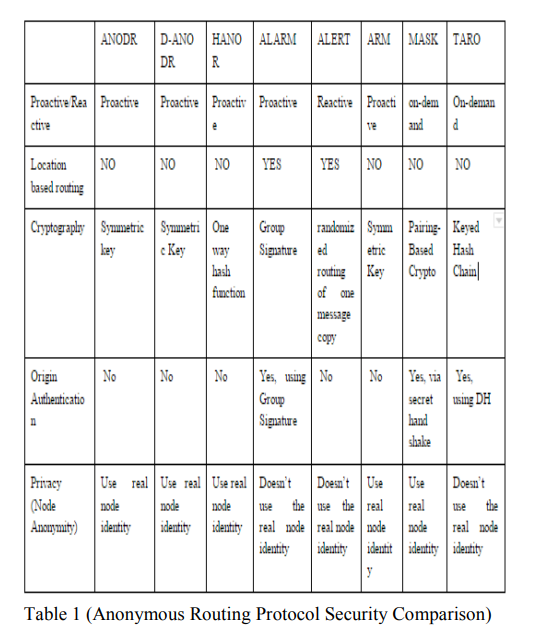
Anonymous routing protocols in MANETs, a security comparative analysis
A Mobile Ad Hoc Network (MANET) is considered a type of network which is wireless and has no fixed infrastructure composed of a set if nodes in self organized fashion which are randomly, frequently and unpredictably mobile. MANETs can be applied in both military and civil environments ones because of its numerous applications. This is due to their special characteristics and self-configuration capability. This is due to its dynamic nature, lack of fixed infrastructure, and the no need of being centrally managed; a special type of routing protocols such as Anonymous routing protocols are needed
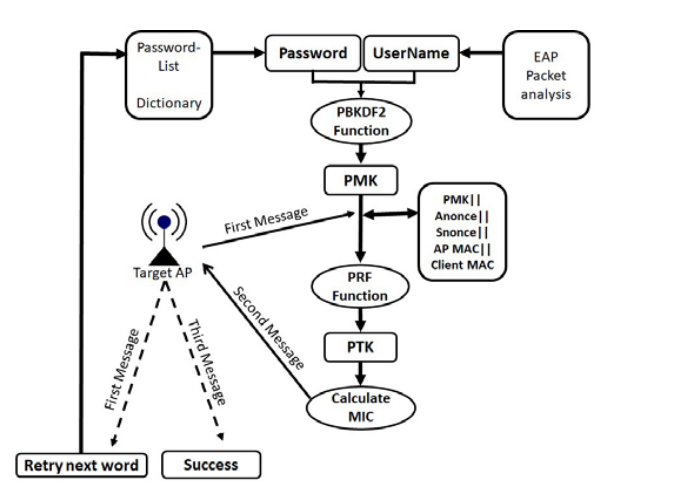
Tunnel-Based EAP Effective Security Attacks WPA2 Enterprise Evaluation and Proposed Amendments
Tunnel-Based Extensible Authentication Protocol has become fundamental for wireless Network access Control. It provides authentication, privacy and authorization for enterprise network access protected by WPA/WPA2 security framework. WPA2 is considered the latest and most secure standard for wireless communication especially for Wi-Fi networks. However, WPA/WPA2-PSK have been lately threatened by advanced versions of wireless attacks. In this paper, we study WPA/WPA2-Enterprise authentication with Tunnel-Based EAP common methods focusing on their strength and weak points and the impact of
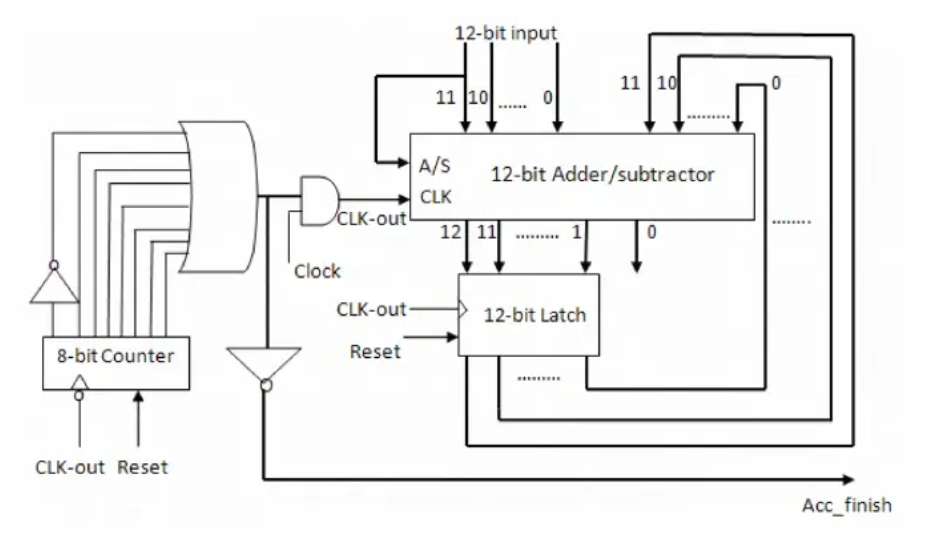
A simplification in integral frequency offset estimation based on joint detection algorithm for WiMAX 802.16e
Initial downlink synchronization for orthogonal frequency division multiple access ( OFDMA ) network access involves timing and frequency synchronization. The frequency offset is produced by oscillator drifts and time-varying Doppler shifts. In mobile WiMAX 802.16e carrier frequency offset (CFO) can be divided into: integral carrier frequency offset (ICFO) and fractional carrier frequency offset (FCFO). There are mainly three methods for CFO estimation: data-aided method, blind and semi-blind. This paper is based on the semi-blind method presented in "Joint detection of integral carrier
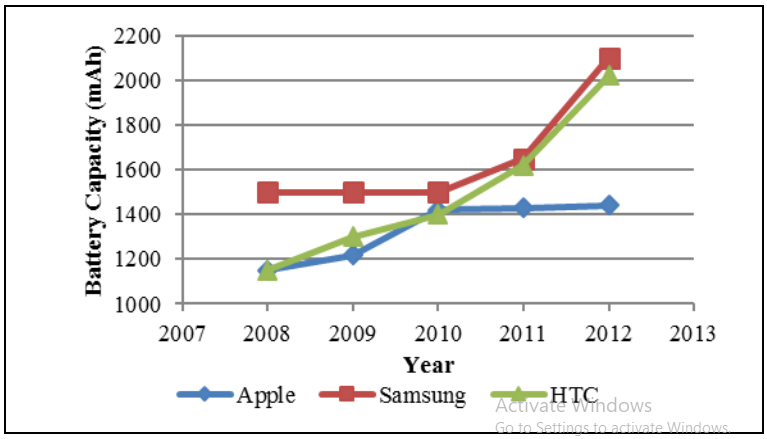
Hardware Advancements Effects on MANET Development, Application and Research
Mobile devices' development has remarkably improved in light of the fast growing hardware advancements. These advancements include multicore processor chips, ultra large main memories and batteries that last for hours even when running modern applications such as file transfer, voice communication and video streaming ...etc. In this paper, we shed the light on recent and future trends of hardware advancements for mobile devices, and their impact on MANET developments. In addition, the effect of such advancements is investigated on application and different research areas. © Springer-Verlag
Towards mature temporal accuracy assessment of processors models and simulators for real-time systems development
Modeling and simulation are becoming extensively used in embedded and Real-Time Systems (RTSs) development throughout the development life-cycle, from the system-level design space exploration to the fine grained time analysis and evaluation of the system and even its components performance. At the core of these systems lies the processor which has been also the center of attention for most of the modeling and simulation efforts related to RTS simulation. Although the temporal accuracy of such models and simulators is of critical importance for Real-Time (RT) applications, it is not yet mature
Fine tuning the enhanced suffix array
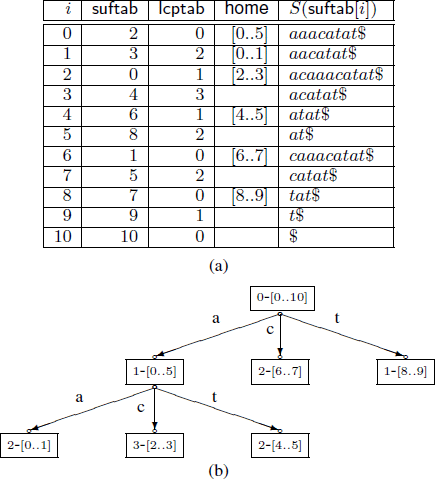
The enhanced suffix array is an indexing data structure used for a wide range of applications in Bioinformatics. It is basically the suffix array but enhanced with extra tables that provide extra information to improve the performance in theory and in practice. In this paper, we present a number of improvements to the enhanced suffix array: 1) We show how to find a pattern of length m in O(m) time, i.e., independent of the alphabet size. 2) We present an improved representation of the bucket table. 3) We improve the access time of addressing the LCP (longest common prefix) table when one byte
CoCoNUT: An efficient system for the comparison and analysis of genomes
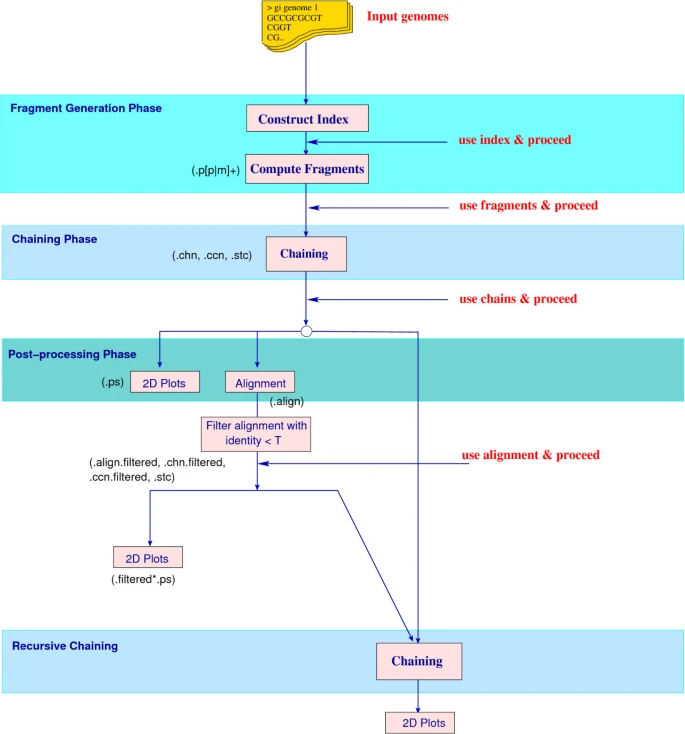
Background: Comparative genomics is the analysis and comparison of genomes from different species. This area of research is driven by the large number of sequenced genomes and heavily relies on efficient algorithms and software to perform pairwise and multiple genome comparisons. Results: Most of the software tools available are tailored for one specific task. In contrast, we have developed a novel system CoCoNUT (Computational Comparative geNomics Utility Toolkit) that allows solving several different tasks in a unified framework: (1) finding regions of high similarity among multiple genomic
Fast localization of the optic disc using projection of image features
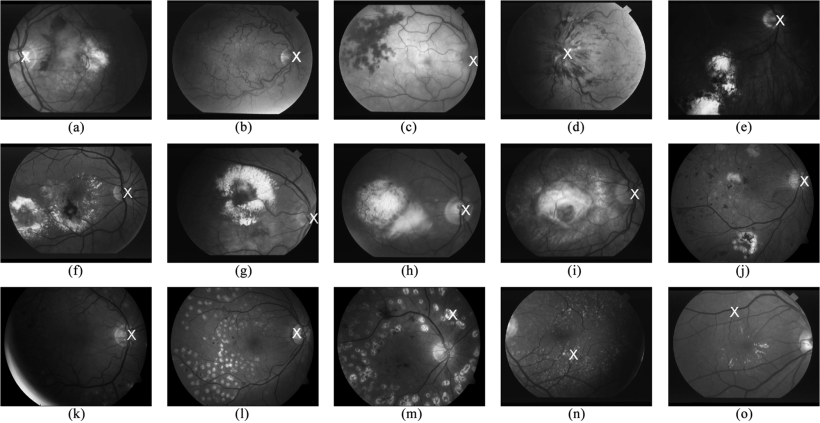
Optic Disc (OD) localization is an important pre-processing step that significantly simplifies subsequent segmentation of the OD and other retinal structures. Current OD localization techniques suffer from impractically-high computation times (few minutes per image). In this work, we present a fast technique that requires less than a second to localize the OD. The technique is based upon obtaining two projections of certain image features that encode the x- and y- coordinates of the OD. The resulting 1-D projections are then searched to determine the location of the OD. This avoids searching
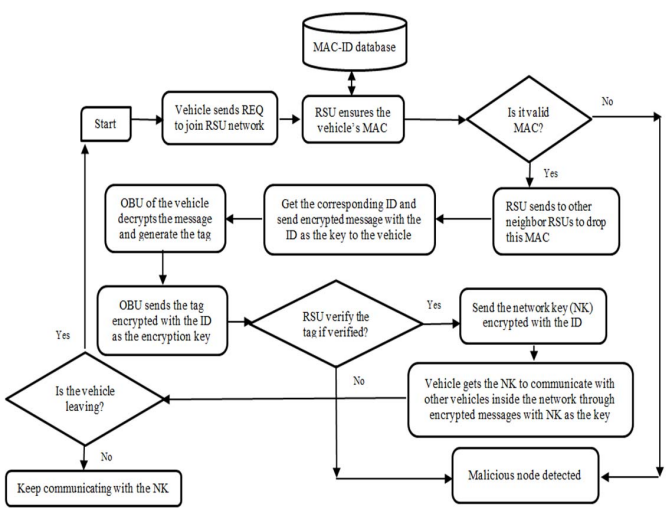
Sybil attack prevention through identity symmetric scheme in vehicular ad-hoc networks
Vehicular Ad-hoc Networks (VANETs) are a subset of Mobile Ad-hoc Networks (MANETs). They are deployed to introduce the ability of inter-communication among vehicles in order to guarantee safety and provide services for people while driving. VANETs are exposed to many types of attacks like denial of service, spoofing, ID disclosure and Sybil attacks. In this paper, a novel lightweight approach for preventing Sybil attack in VANETs is proposed. The presented protocol scheme uses symmetric key encryption and authentication between Road Side Units (RSUs) and vehicles on the road so that no
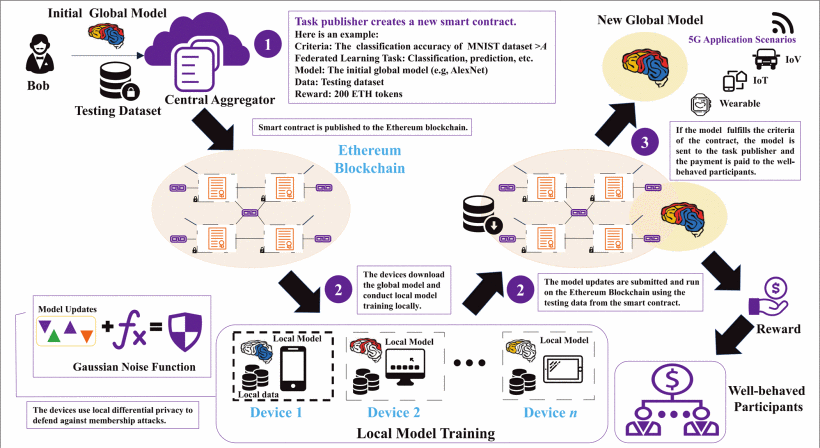
A Secure Federated Learning Framework for 5G Networks
Federated learning (FL) has recently been proposed as an emerging paradigm to build machine learning models using distributed training datasets that are locally stored and maintained on different devices in 5G networks while providing privacy preservation for participants. In FL, the central aggregator accumulates local updates uploaded by participants to update a global model. However, there are two critical security threats: poisoning and membership inference attacks. These attacks may be carried out by malicious or unreliable participants, resulting in the construction failure of global