
On the secrecy rate region for the interference channel
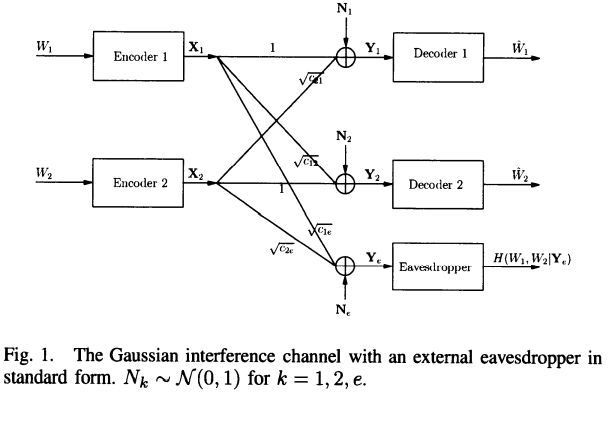
This paper studies interference channels with security constraints. The existence of an external eavesdropper in a two-user interference channel is assumed, where the network users would like to secure their messages from the external eavesdropper. The cooperative binning and channel prefixing scheme is proposed for this system model which allows users to cooperatively add randomness to the channel in order to degrade the observations of the external eavesdropper. This scheme allows users to add randomness to the channel in two ways: 1) Users cooperate in their design of the binning codebooks
The wiretap channel with feedback: Encryption over the channel
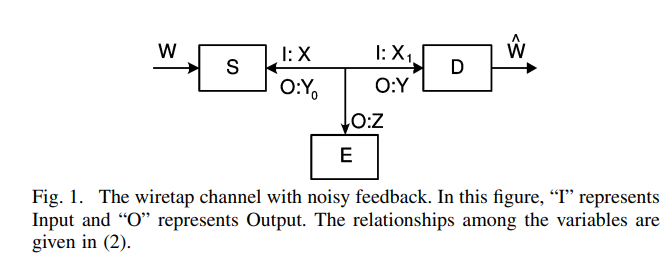
In this work, the critical role of noisy feedback in enhancing the secrecy capacity of the wiretap channel is established. Unlike previous works, where a noiseless public discussion channel is used for feedback, the feed-forward and feedback signals share the same noisy channel in the present model. Quite interestingly, this noisy feedback model is shown to be more advantageous in the current setting. More specifically, the discrete memoryless modulo-additive channel with a full-duplex destination node is considered first, and it is shown that the judicious use of feedback increases the
On the secrecy capacity of fading channels
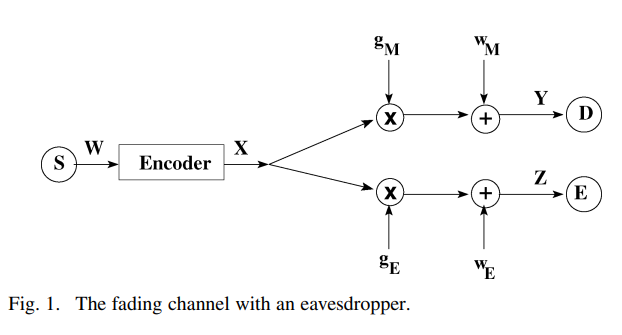
We consider the secure transmission of information over an ergodic fading channel in the presence of an eavesdropper. Our eavesdropper can be viewed as the wireless counterpart of Wyner's wiretapper. The secrecy capacity of such a system is characterized under the assumption of asymptotically long coherence intervals. We first consider the full channel state information (CSI) case, where the transmitter has access to the channel gains of the legitimate receiver and the eavesdropper. The secrecy capacity under this full CSI assumption serves as an upper bound for the secrecy capacity when only
The relay-eavesdropper channel: Cooperation for secrecy
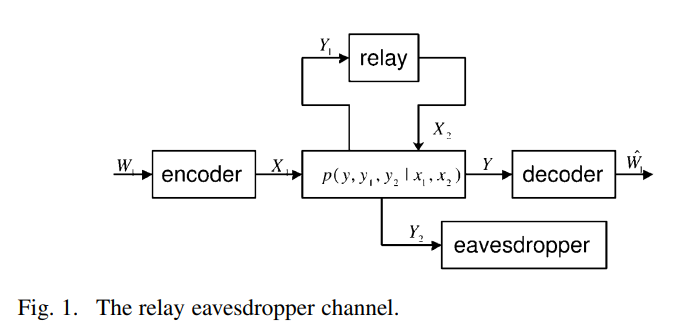
This paper establishes the utility of user cooperation in facilitating secure wireless communications. In particular, the four-terminal relay-eavesdropper channel is introduced and an outer-bound on the optimal rate-equivocation region is derived. Several cooperation strategies are then devised and the corresponding achievable rate-equivocation region are characterized. Of particular interest is the novel noise-forwarding (NF) strategy, where the relay node sends codewords independent of the source message to confuse the eavesdropper. This strategy is used to illustrate the deaf helper
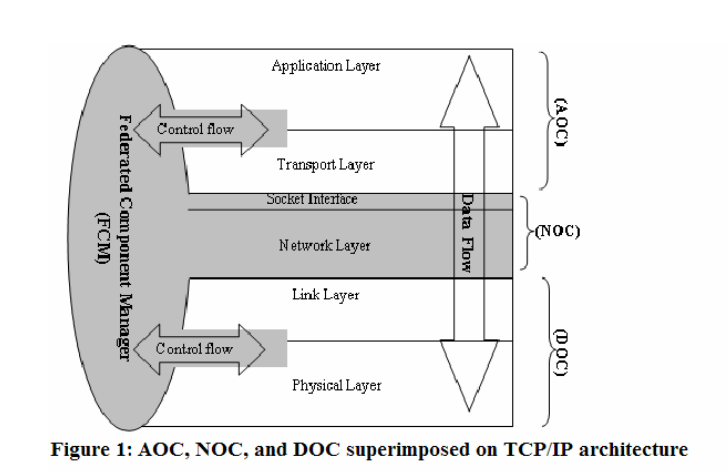
Towards a federated network architecture
The layered architecture that guided the design of the Internet is deemed inadequate as a reference model for engineering protocols for NGN. Layered protocol suites impose a strict sequential order on protocol execution conflicting with the efficient engineering of end systems, as well as failing to express vertical functional integration, the separation of control and data planes, and the distributed nature of network functions. Furthermore, protocols developed according to the layered architecture are implemented as monolithic blocks with undefined or implicit dependencies lacking
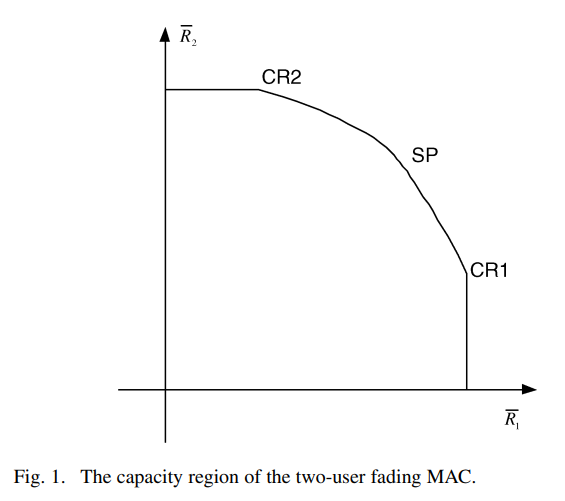
The water-filling game in fading multiple-access channels
A game-theoretic framework is developed to design and analyze the resource allocation algorithms in fading multiple-access channels (MACs), where the users are assumed to be selfish, rational, and limited by average power constraints. The maximum sum-rate point on the boundary of the MAC capacity region is shown to be the unique Nash equilibrium of the corresponding water-filling game. This result sheds a new light on the opportunistic communication principle. The base station is then introduced as a player interested in maximizing a weighted sum of the individual rates. A Stackelberg
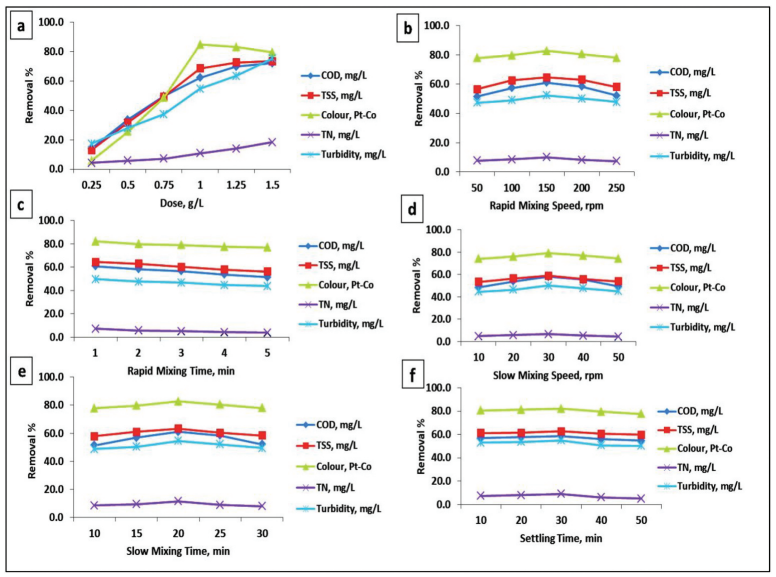
Coagulation/flocculation process for textile mill effluent treatment: experimental and numerical perspectives
This study investigates the feasibility of applying coagulation/flocculation process for real textile wastewater treatment. Batch experiments were performed to detect the optimum performance of four different coagulants; Ferric Sulphate (Fe2(SO4)3), Aluminium Chloride (AlCl3), Aluminium Sulphate (Al2(SO4)3) and Ferric Chloride (FeCl3) at diverse ranges of pH (1–11) on the removal of chemical oxygen demand (COD), total suspended solids (TSS), colour, total nitrogen (TN) and turbidity from real textile wastewater. At pH 9, FeCl3 demonstrated the most effective removal for all studied
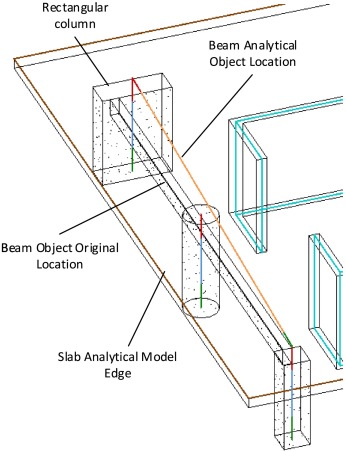
Geometrically accurate structural analysis models in BIM-centered software
Current BIM models impose restrictions on the geometry of building members in their analytical models, where components are fitted to wireframe representations. This unnecessary reduction in geometrical representation drives the loss of structural details and may lead to defective structural analysis. The present paper addresses the current shortcomings in the semantics of analytical models within BIM environments and recommends enhancements. An explanation is given of a BIM-centered structural analysis system based on coupling finite elements for vertical and horizontal elements, and boundary
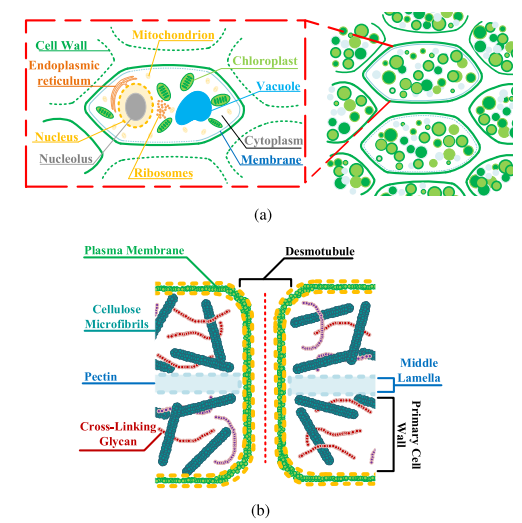
Cole bio-impedance model variations in daucus carota sativus under heating and freezing conditions
This paper reports on the variations in the parameters of the single dispersion Cole bio-impedance model of Daucus Carota Sativus (carrots) under heating and freezing conditions. Experiments are conducted on six samples with recorded live bio-impedance spectra versus temperature. The Cole model parameters are extracted from the measured data using the Flower Pollination Algorithm (FPA) optimization technique and their variations are correlated with well-known bio-chemical and bio-mechanical variations. This represents a non-invasive method for characterizing and measuring the degree of change
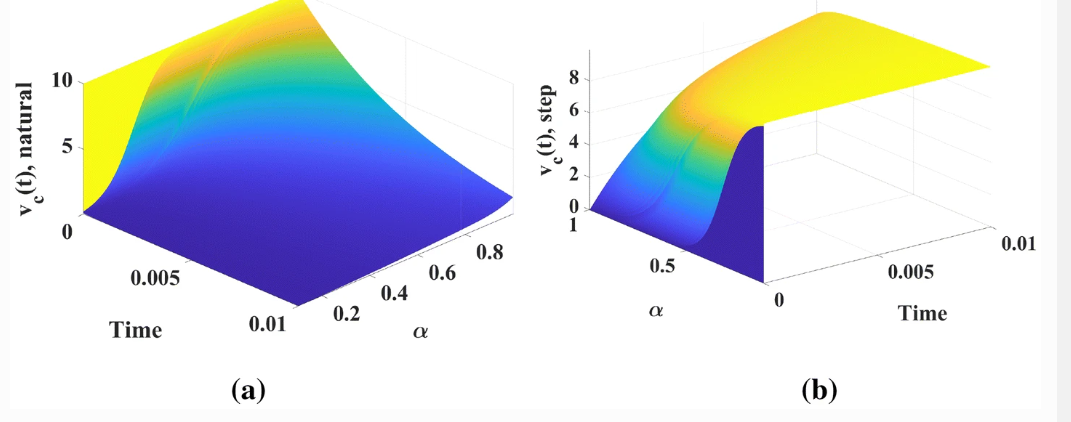
Two implementations of fractional-order relaxation oscillators
This work proposes general formulas for designing two different topologies of fractional-order relaxation oscillators. One topology contains an Operational Amplifier and the other one relies on an Operational Trans-Resistance Amplifier. The design procedure hinges on the general fractional-order natural and step responses of RC, which is proved in this work depending on Mittag Leffler function. The proposed topologies can be controlled to generate symmetrical and non-symmetrical square wave signals. They also benefit from the employment of fractional-order capacitors (FOCs), which makes it