
A fully automated approach for Arabic slang lexicon extraction from microblogs
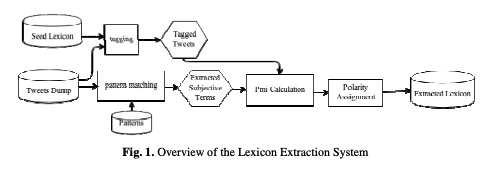
With the rapid increase in the volume of Arabic opinionated posts on different social media forums, comes an increased demand for Arabic sentiment analysis tools and resources. Social media posts, especially those made by the younger generation, are usually written using colloquial Arabic and include a lot of slang, many of which evolves over time. While some work has been carried out to build modern standard Arabic sentiment lexicons, these need to be supplemented with dialectical terms and continuously updated with slang. This paper proposes a fully automated approach for building a
AraVec: A set of Arabic Word Embedding Models for use in Arabic NLP
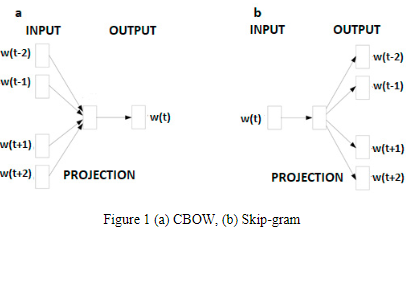
Advancements in neural networks have led to developments in fields like computer vision, speech recognition and natural language processing (NLP). One of the most influential recent developments in NLP is the use of word embeddings, where words are represented as vectors in a continuous space, capturing many syntactic and semantic relations among them. AraVec is a pre-Trained distributed word representation (word embedding) open source project which aims to provide the Arabic NLP research community with free to use and powerful word embedding models. The first version of AraVec provides six

Investigating analysis of speech content through text classification
The field of Text Mining has evolved over the past years to analyze textual resources. However, it can be used in several other applications. In this research, we are particularly interested in performing text mining techniques on audio materials after translating them into texts in order to detect the speakers' emotions. We describe our overall methodology and present our experimental results. In particular, we focus on the different features selection and classification methods used. Our results show interesting conclusions opening up new horizons in the field, and suggest an emergence of
Multimodal Video Sentiment Analysis Using Deep Learning Approaches, a Survey
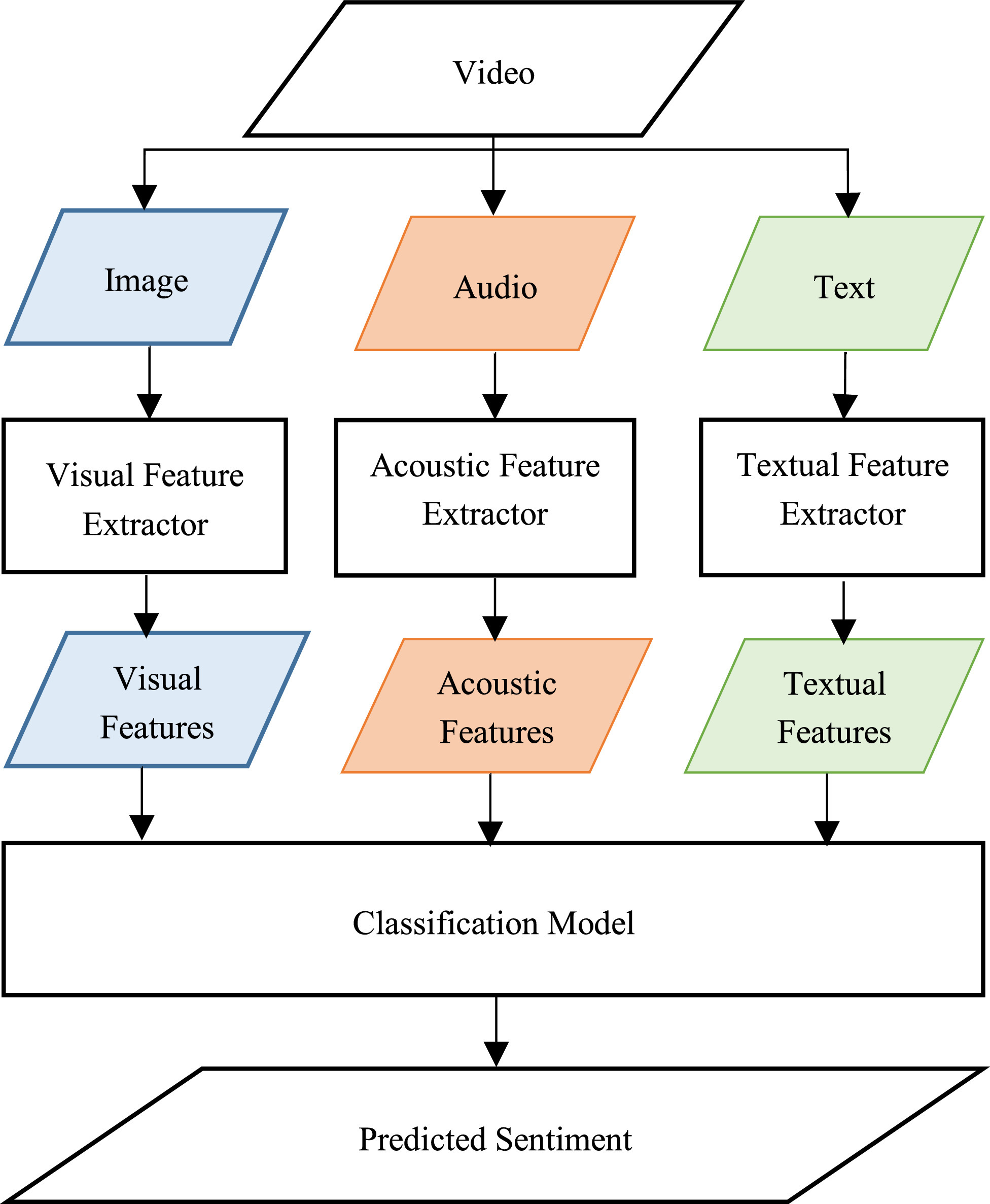
Deep learning has emerged as a powerful machine learning technique to employ in multimodal sentiment analysis tasks. In the recent years, many deep learning models and various algorithms have been proposed in the field of multimodal sentiment analysis which urges the need to have survey papers that summarize the recent research trends and directions. This survey paper tackles a comprehensive overview of the latest updates in this field. We present a sophisticated categorization of thirty-five state-of-the-art models, which have recently been proposed in video sentiment analysis field, into
Automated cardiac-tissue identification in composite strain-encoded (C-SECN) images using fuzzy K-means and bayesian classifier
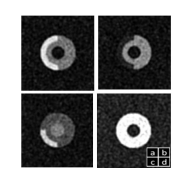
Composite Strain Encoding (C-SENC) is an MRI acquisition technique for simultaneous acquisition of cardiac tissue viability and contractility images. It combines the use of black-blood delayed-enhancement imaging to identify the infracted (dead) tissue inside the heart wall muscle and the ability to image myocardial deformation (MI) from the strain-encoding (SENC) imaging technique. In this work, we propose an automatic image processing technique to identify the different heart tissues. This provides physicians with a better clinical decision-making tool in patients with myocardial infarction
Code Smells and Detection Techniques: A Survey
Design and code smells are characteristics in the software source code that might indicate a deeper design problem. Code smells can lead to costly maintenance and quality problems, to remove these code smells, the software engineers should follow the best practices, which are the set of correct techniques which improve the software quality. Refactoring is an adequate technique to fix code smells, software refactoring modifies the internal code structure without changing its functionality and suggests the best redesign changes to be performed. Developers who apply correct refactoring sequences
A secure face verification system based on robust hashing and cryptography
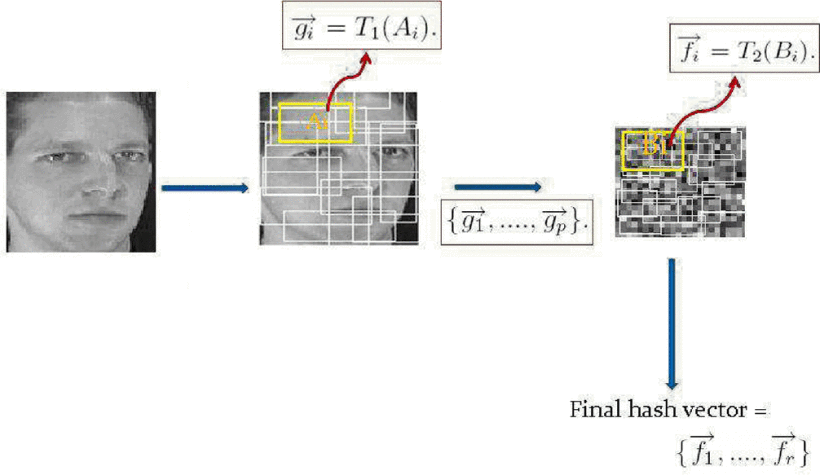
Face verification has been widely studied during the past two decades. One of the challenges is the rising concern about the security and privacy of the template database. In this paper, we propose a secure face verification system which employs a user dependent one way transformation based on a two stage hashing algorithm.We first hash the face image using a two stages robust image hashing technique, then the result hash vector is encrypted using Advanced Encryption Standard (AES). Both the hashing and the encryption/decryption keys are generated from the user claimed ID, using a modified
Replica placement in peer-assisted clouds: An economic approach
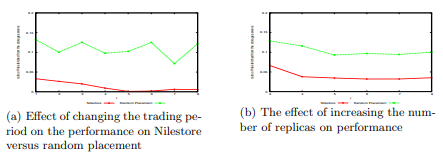
We introduce NileStore, a replica placement algorithm based on an economical model for use in Peer-assisted cloud storage. The algorithm uses storage and bandwidth resources of peers to offload the cloud provider's resources. We formulate the placement problem as a linear task assignment problem where the aim is to minimize time needed for file replicas to reach a certain desired threshold. Using simulation, We reduce the probability of a file being served from the provider's servers by more than 97.5% under realistic network conditions. © 2011 IFIP International Federation for Information
Cloud-based parallel suffix array construction based on MPI
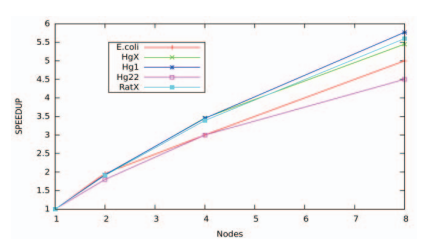
Massive amount of genomics data are being produced nowadays by Next Generation Sequencing machines. The suffix array is currently the best choice for indexing genomics data, because of its efficiency and large number of applications. In this paper, we address the problem of constructing the suffix array on computer cluster in the cloud. We present a solution that automates the establishment of a computer cluster in a cloud and automatically constructs the suffix array in a distributed fashion over the cluster nodes. This has the advantage of encapsulating all set-up details and execution of
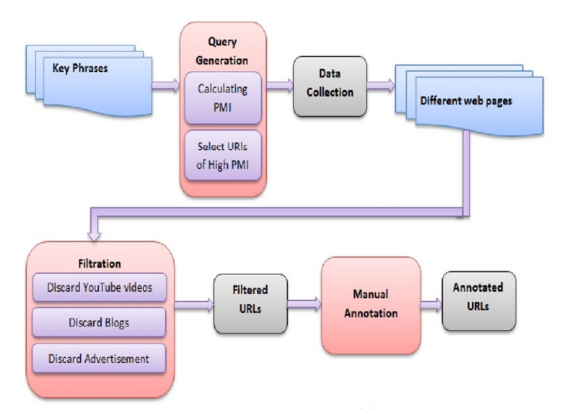
A system for assessing the quality of Web pages
The World Wide Web has brought about an unprecedented explosion in the amount of information available on-line, largely in the form of Web pages. The fact that anyone can publish anything has ultimately led to pages with varying degrees of quality. This paper aims at investigating means for assessing the quality of a random web page and provides a quantitative approach for selecting high quality-content pages. The work was motivated by the need to locate pages that may be considered as candidates for translation. © 2013 IEEE.