
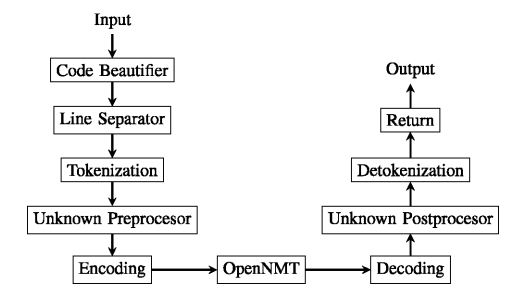
Neural Machine Based Mobile Applications Code Translation
Although many cross platform mobile development software used a trans-compiler-based approach, it was very difficult to generalize it to work in both directions. For example, to convert between Java for Android Development and Swift for iOS development and vice versa. This is due to the need of writing a specific parser for each source language, and a specific code generator for each destination language. Neural network-based models are used successfully to translate between natural languages, including English, French, German any many others by providing enough datasets and without the need
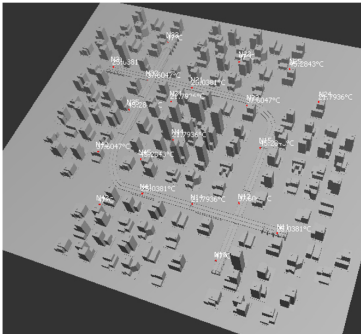
Interactive 3D visualization for wireless sensor networks
Wireless sensor networks open up a new realm of ubiquitous computing applications based on distributed large-scale data collection by embedded sensor nodes that are wirelessly connected and seamlessly integrated within the environment. 3D visualization of sensory data is a challenging issue, however, due to the large number of sensors used in typical deployments, continuous data streams, and constantly varying network topology. This paper describes a practical approach for interactive 3D visualization of wireless sensor network data. A regular 3D grid is reconstructed using scattered sensor
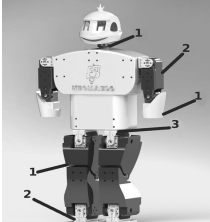
Innovative human-robot interaction for a robot tutor in biology game
Robots nowadays, are introduced to many domains and fields. One of these fields is education. We introduce integrating robots and games in education. We have designed a humanoid robot tutoring biology. Our robot is interacting with a student to play a game to enhance and examine the student's knowledge. In our game, we developed cognitive capabilities for the robot. We analyzed the features that both the robot and the game have to possess, and we developed a system for organ detection and recognition with the highest possible accuracy and lowest processing time. Our game introduces a multi
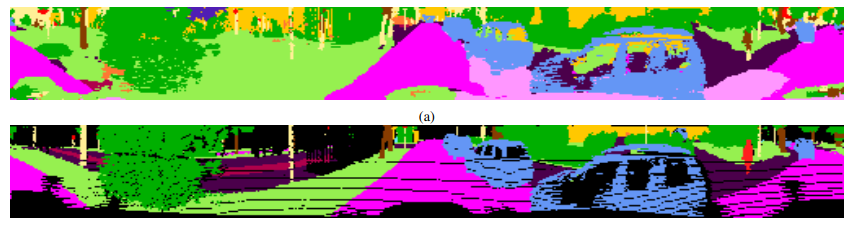
Improved Semantic Segmentation of Low-Resolution 3D Point Clouds Using Supervised Domain Adaptation
One of the key challenges in applying deep learning to solve real-life problems is the lack of large annotated datasets. Furthermore, for a deep learning model to perform well on the test set, all samples in the training and test sets should be independent and identically distributed (i.i.d.), which means that test samples should be similar to the samples that were used to train the model. In many cases, however, the underlying training and test set distributions are different. In such cases, it is common to adapt the test samples by transforming them to their equivalent counterparts in the
Fault-Recovery and Robust Deadlock Control of Reconfigurable Multi-Unit Resource Allocation Systems Using Siphons
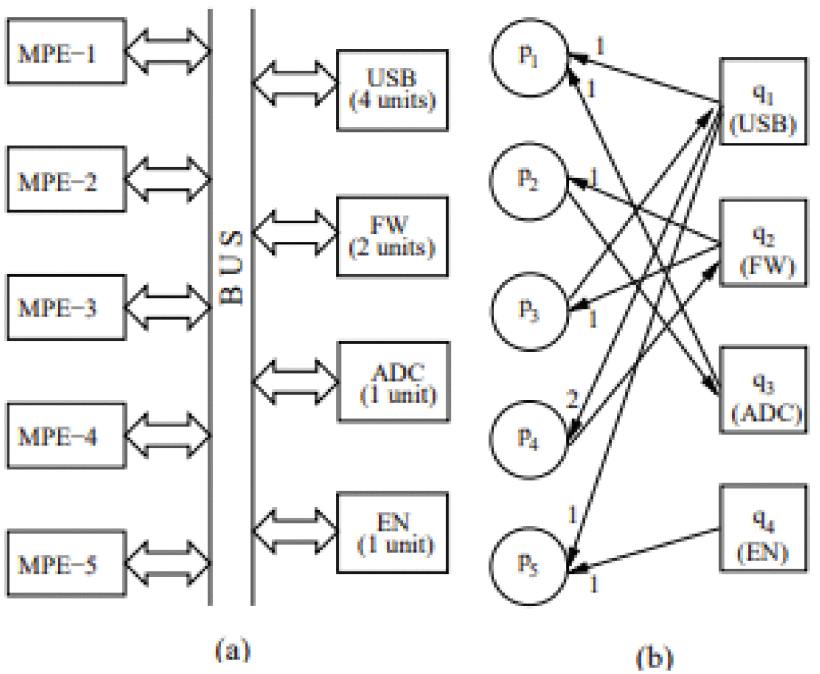
A multi-unit resource allocation system usually contains several processes and a number of resources with multiple units. Due to the competition for shared resources in these systems, deadlocks may occur. Recently, researchers have shown an increased awareness in deadlock control strategies for such a kind of systems without considering the dynamic changes such as processing failures and rework by using the Petri net paradigm. This article reports a new strategy for deadlock analysis and control in reconfigurable multi-unit resource systems (MRSs). We discuss a generalized class of Petri nets
A Theoretical Approach for Correlating Proteins to Malignant Diseases
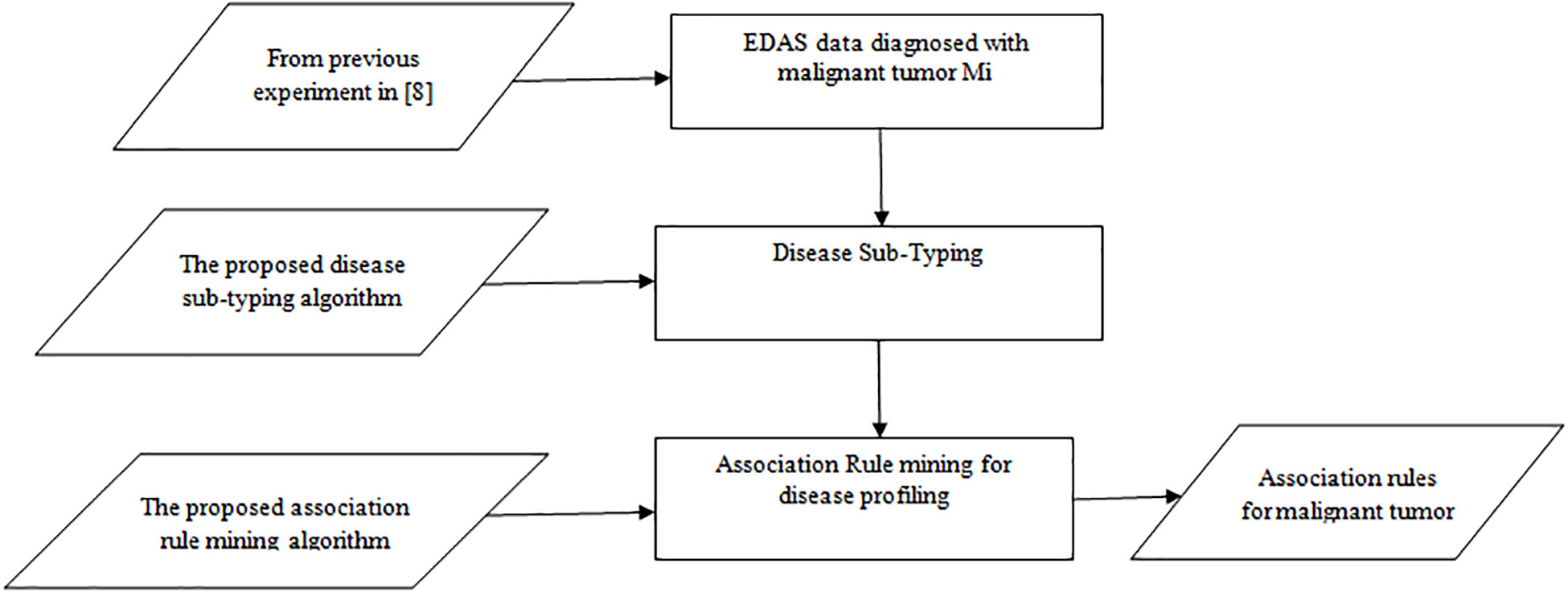
Malignant Tumors are developed over several years due to unknown biological factors. These biological factors induce changes in the body and consequently, they lead to Malignant Tumors. Some habits and behaviors initiate these biological factors. In effect, the immune system cannot recognize a Malignant Tumor as foreign tissue. In order to discover a fascinating pattern of these habits, behaviors, and diseases and to make effective decisions, different machine learning techniques should be used. This research attempts to find the association between normal proteins (environmental factors) and
Multi-center, Multi-vendor, and Multi-disease Cardiac Image Segmentation Using Scale-Independent Multi-gate UNET
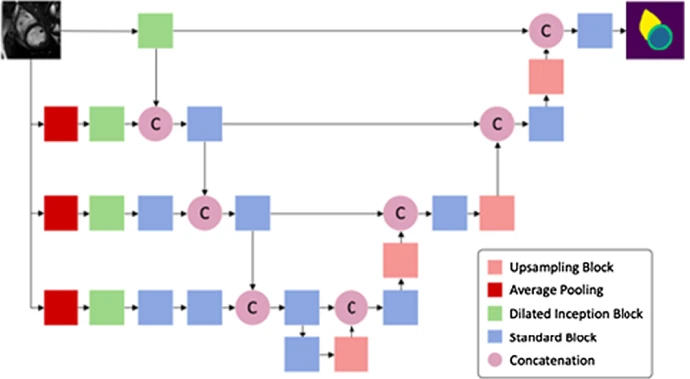
Heart segmentation in Cardiac MRI images is a fundamental step to quantify myocardium global function. In this paper, we introduce a pipeline for heart localization and segmentation that is fast and robust even in the apical slices that have small myocardium. Also, we propose an enhancement to the popular U-Net architecture for segmentation. The proposed method utilizes the aggregation of different feature scales from the image by using the inception block along with the multi-gate block that propagates the multi-scale context of the supplied data where the heart is subject to changes in scale
DPSK receiver-sensitivity enhancement using an SOA in front of the receiver
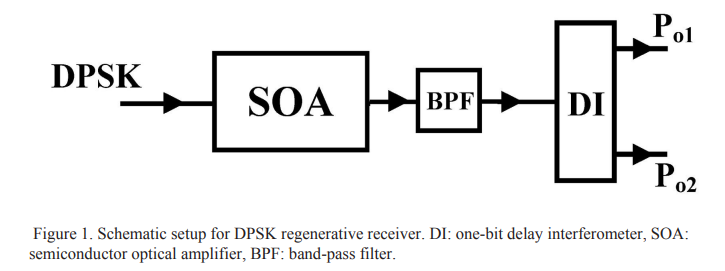
A technique for DPSK receiver-sensitivity improvement is demonstrated using numerical simulations. It is based on reshaping and reamplifying of received 80 Gbit/s DPSK using an SOA before a one bit delay interferometer. The SOA re-amplifies data without adding amplitude or differential phase noise due to its gain-compression. The system is tested using 231-1 PRBS RZ-DPSK (NRZ-DPSK) loaded with both phase and amplitude noise. It shows 2dB (1.7dB) quality-factor improvement. The estimated BER by error-counting shows receiver-sensitivity improvement of ≅3dB in case of single-ended detection and
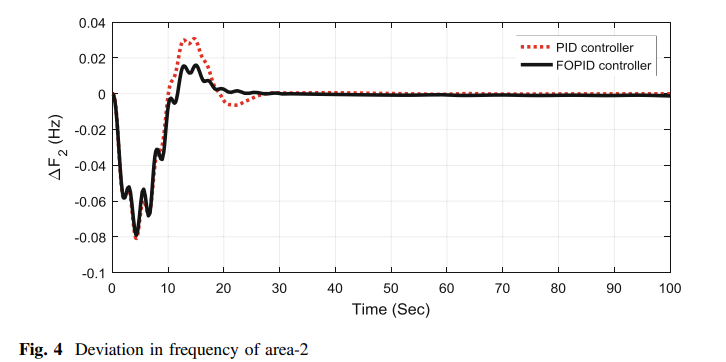
TLBO algorithm optimized fractional-order PID controller for AGC of interconnected power system
The present study focuses on the problem of automatic generation control (AGC) by employing the design of fractional-order proportional–integral– derivative controller (FOPID). A hydrothermal power system with governor dead band (GDB) and generation rate constraint (GRC) is considered for investigation. FOPID controller optimal values are obtained by using teacher learning-based optimization (TLBO) technique, and the employed objective function is integral time-multiplied absolute error (ITAE). The supremacy of the proposed controller is also shown by comparing with PID controller. Further
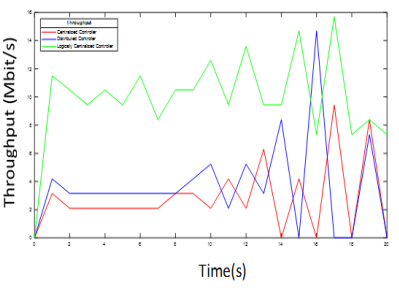
Software Defined Network Based Management Framework for Wireless Sensor Networks
Wireless Sensor Network (WSN) has growth rapidly over the past years. As it is now applied in many fields as in health care systems, home automation, security surveillance, disaster management and more. Due to the high demand on WSN, it is important to find a solution for one of the major challenges in WSN which is the energy consumption of its battery operated sensor device. So in this paper we propose to use Software Defined technology into WSN to enhance network management and to prolong network lifetime. As the main feature of Software Defined Network (SDN) is the centralization of control