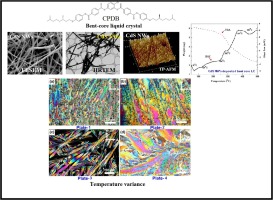
Enhancing the performance of high luminescent and dielectrically capable cadmium sulfide nanowire (CdS NW) is of great importance, because of their promising ability in analyzing the dimensionality and size. The tuned physical characteristics of semiconductor CdS NWs allowed the manipulation of both electronic and optoelectronic devices at the nanoscale by dispersing a new bent core (BC) liquid crystal (LC) compound. This was derived from a 4-chlororesorcinol central core unit with two terephthalate based rod-like units carrying chiral (S)-3, 7-dimethyloctyloxy (namely ‘CPDB’) terminal chains
Circuit Theory and Applications
Software and Communications
Aggrandize efficiency of ultra-thin silicon solar cell via topical clustering of silver nanoparticles
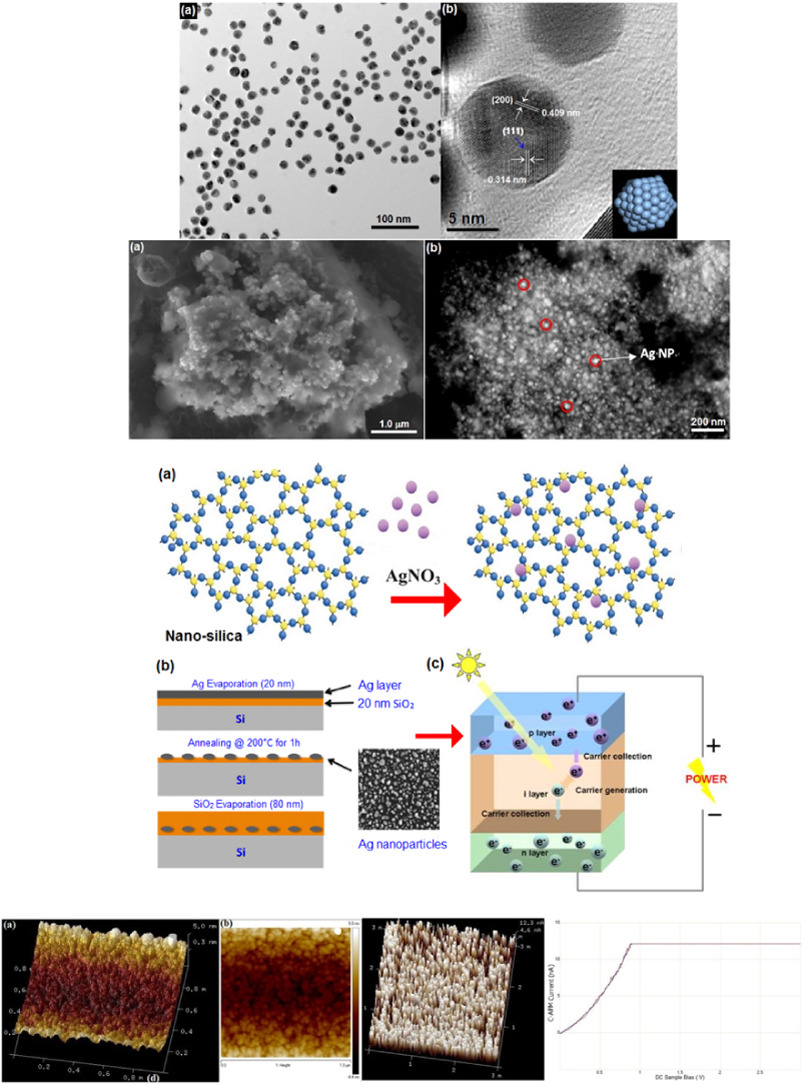
A highly efficient photovoltaic nanocomposite device is demonstrated by fabrication of structural clusters of silver nanoparticles (Ag NPs) on silicon solar cells via a boil deposition method. The efficiency of silicon solar cell was augmented by coating Ag NPs ultra-thin-film deposition on silicon solar cell. Chemically synthesized silver NP's, their consumption on a silicon thin layer and the operation of photovoltaic nanocomposite device were characterized by using several electron probe microscopic pectroscopic and spectrometric techniques viz. x-ray diffraction (XRD), scanning electron